Kitchen Cleaning Services
Detailed commercial cleaning for cooking lines, equipment, floors, walls, and other hard-working areas, scheduled around your Omaha restaurant's operating hours.
Professional Cleaning Built Around Restaurant Operations
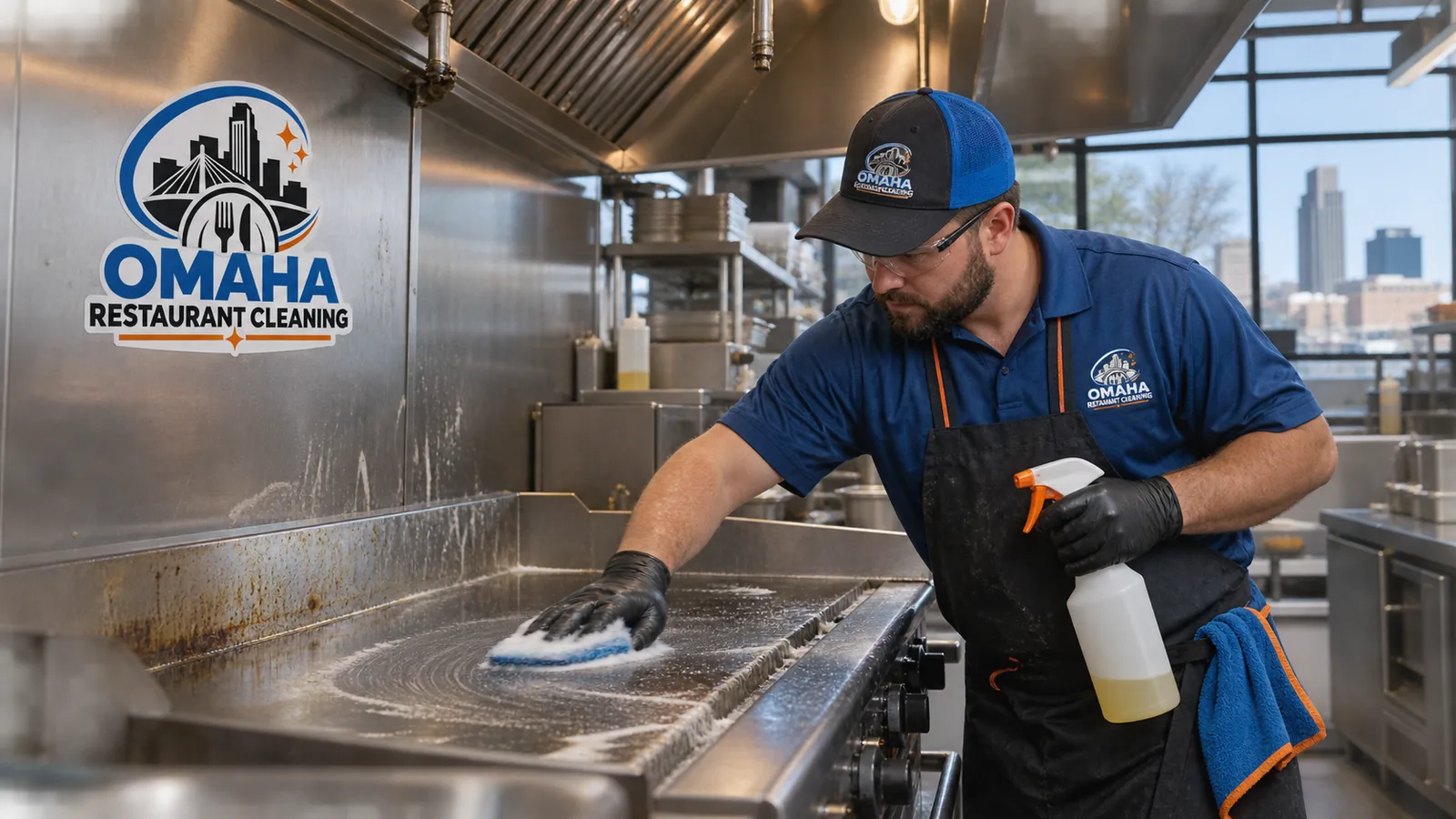
Kitchen Cleaning Services address the grease, carbon deposits, food residue, and soil that routine shift cleaning may leave behind. Omaha Restaurant Cleaning handles planned deep cleaning for commercial kitchens, with the scope based on the equipment, surfaces, access, and condition of each facility.
As restaurant specialists serving Omaha, NE, we plan the work around the realities of food service: hot equipment must cool, food and utensils need protection, chemical dwell times cannot be rushed, and cleaned areas should be dry and ready before the next shift. Our starting point is a walkthrough that identifies priorities, access restrictions, sensitive materials, and the restaurant's available cleaning window.
We serve restaurants from our Leavenworth Street location near downtown Omaha. The Old Market's older commercial buildings can have compact kitchens and restricted loading access, while West Omaha restaurants often occupy larger retail developments with more equipment and floor area. In either setting, a useful plan states what will be cleaned, what preparation is required, and when the kitchen can return to service.
What Commercial Kitchen Cleaning Services Can Cover
Cooking Line and Equipment Exteriors
Degreasing for ranges, fryers, griddles, ovens, salamanders, stainless panels, control areas, casters, and accessible exterior surfaces. Manufacturer instructions and surface compatibility guide the method.
Floors, Walls, and Base Areas
Scrubbing food-safe flooring, grout, wall surfaces, coving, floor edges, and accessible areas beneath movable equipment. Special attention goes to grease films that can make floors slippery.
Preparation and Storage Areas
Cleaning for empty prep tables, shelving, sinks, backsplashes, and accessible storage surfaces. Food, utensils, and single-service items must be removed or securely protected first.
Hard-to-Reach Buildup
Detail work behind and beside movable appliances, around legs and wheels, under counters, and along junctions where daily mopping may not reach.
Kitchen Equipment Cleaning
A scope may include removable racks, trays, filters, guards, and other approved components. Electrical parts, gas connections, and delicate finishes require equipment-specific precautions.
Scheduled Deep Cleaning
One-time resets and recurring service can be arranged around closing periods, prep schedules, seasonal demand, or a planned maintenance shutdown.
Commercial Kitchen Deep Cleaning With a Defined Scope
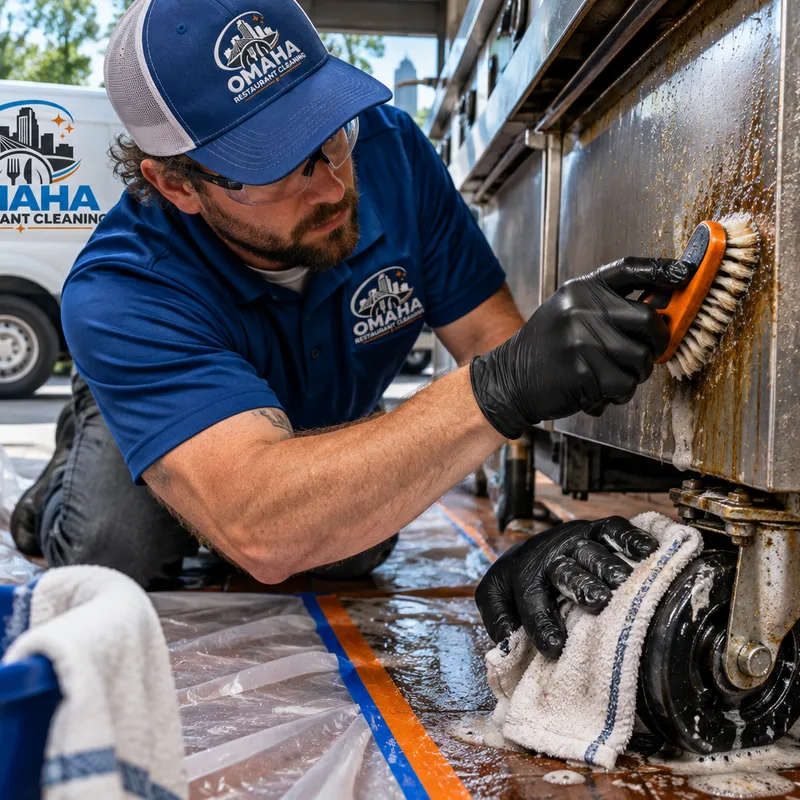
Effective restaurant kitchen cleaning begins with the correct sequence. Loose debris is removed before detergent is applied. Grease-cutting chemistry needs the right dilution and dwell time, then the surface is agitated, rinsed or wiped as appropriate, and dried. Stainless steel is cleaned with its grain, while aluminum, painted surfaces, stone, and resilient flooring may require different products.
A written scope should distinguish cleaning from equipment repair and from specialized exhaust-system work. Kitchen cleaners can address accessible appliance exteriors and approved removable parts, but internal electrical components, gas controls, refrigeration systems, and inaccessible machinery should be handled according to manufacturer instructions or by a qualified technician. Likewise, hood and duct cleaning is a specialized fire-safety discipline and should not be assumed to be part of general kitchen cleaning unless it is specifically listed.
Before work starts, the restaurant should identify equipment that cannot be moved, floor drains that need protection, sanitation procedures for food-contact surfaces, and the person authorized to approve the completed work. This preparation helps the cleaning crew use the available shutdown window efficiently.
How Our Restaurant Kitchen Cleaning Process Works
-
Step 1 of 5
Walk Through the Kitchen
We review the cooking line, prep zones, storage areas, flooring, wall surfaces, access, utilities, and equipment that may need to be moved. The restaurant identifies operating constraints and high-priority concerns.
-
Step 2 of 5
Set the Scope and Schedule
The cleaning plan lists included surfaces, exclusions, required preparation, and the service window. Scheduling may take place after closing, on a dark day, or during another period that allows equipment to cool safely.
-
Step 3 of 5
Prepare and Protect
Food, utensils, cookware, and disposables are removed or covered as agreed. Equipment is shut down by authorized restaurant staff when required, and sensitive controls or adjacent areas are protected.
-
Step 4 of 5
Clean in a Controlled Sequence
The crew works through the approved areas using suitable degreasers, agitation tools, wet recovery methods, and detail cleaning. Cross-contamination is reduced by separating tools and tasks by area.
-
Step 5 of 5
Inspect Before Handover
Completed areas are checked against the scope. Any access limitation or maintenance concern observed during cleaning is documented so management can decide on the next step.
How Much Does Commercial Kitchen Cleaning Cost in Omaha?
Commercial kitchen deep cleaning in Omaha typically costs about $500 to $2,500, while a large kitchen, heavy buildup, or an extensive equipment list may cost more. A focused cleaning of a small line usually falls near the lower end; a full floor, wall, prep-area, and equipment scope falls higher.
Price changes with kitchen size, grease level, equipment quantity, access, overnight scheduling, required protection, and whether appliances can be moved safely. These are general, nonbinding ranges. Omaha Restaurant Cleaning confirms the exact cost after a walkthrough and written scope.
Why Restaurants Schedule Professional Kitchen Cleaning
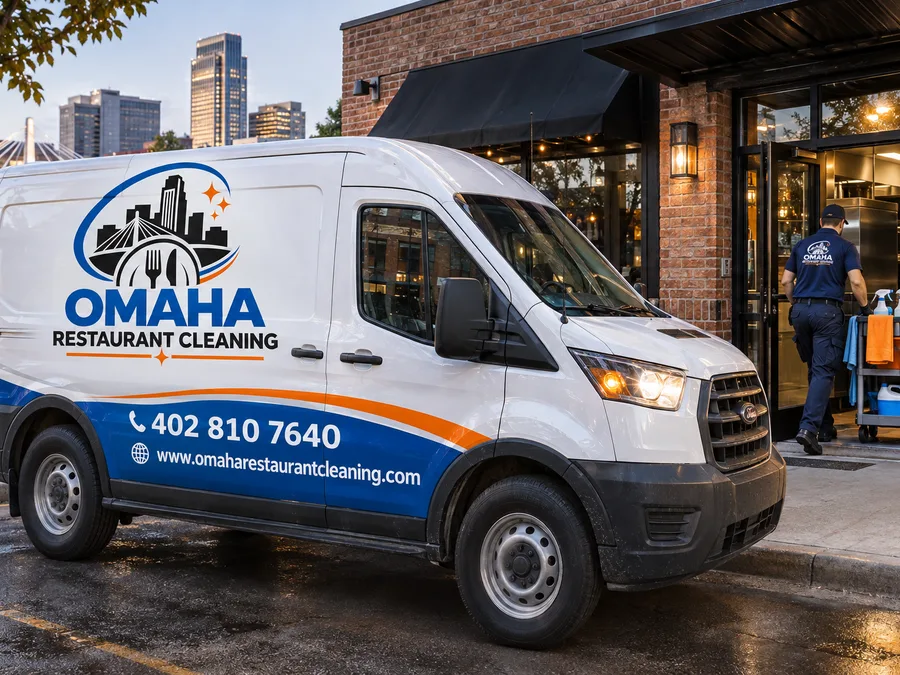
Daily closing duties remain the foundation of kitchen sanitation. A professional kitchen cleaning adds labor, tools, and concentrated attention for areas that are difficult to complete during a normal shift. It is especially useful before a reopening, after an unusually busy period, when changing kitchen management, or when buildup has spread behind and beneath equipment.
Omaha's seasons also affect planning. Winter snow and deicing residue can be tracked into receiving and back-of-house areas, while warm-weather traffic and patio service can increase the pace of kitchen operations. Entry mats, receiving routes, and floor edges may need added attention as conditions change. In the Old Market, loading and parking constraints can affect crew access. Restaurants near the CHI Health Center and downtown event traffic may prefer cleaning windows that avoid major service periods.
Professional cleaning supports a restaurant's sanitation program, but it does not replace employee cleaning schedules, pest control, equipment maintenance, or regulatory inspections. Food establishments in Omaha should follow applicable requirements from the Douglas County Health Department and the Nebraska Food Code. Management remains responsible for its food-safety procedures and for deciding when sanitized food-contact equipment can return to use.
Questions Omaha Restaurant Operators Ask
How long does restaurant kitchen cleaning take?
A focused equipment or floor cleaning may take several hours, while a full deep cleaning can require an overnight window or a planned closure. Kitchen size, grease buildup, access behind equipment, drying time, and the number of cleaners affect the schedule. For Omaha restaurants with late service or downtown event traffic, the work window should be agreed upon before the crew arrives.
Can you clean while our restaurant is closed overnight?
Overnight cleaning may be scheduled when there is enough time for equipment to cool, the crew to complete the scope, and surfaces to dry before prep begins. Restaurant staff must handle shutdown procedures for equipment when required. Old Market access limitations and building rules should also be discussed during scheduling.
What should we do before the kitchen cleaners arrive?
Remove or securely protect food, clean utensils, cookware, paper goods, and personal items from the work area. Empty approved shelves, identify equipment that must remain connected, and arrange authorized shutdown of hot or powered appliances. The written scope should assign responsibility for moving equipment and for reopening the kitchen.
Does kitchen equipment cleaning include inside every appliance?
No, internal appliance cleaning is included only when the specific component is safe, accessible, and listed in the scope. Removable racks and trays may be appropriate, while electrical assemblies, gas controls, motors, compressors, and other serviceable parts require manufacturer-approved procedures or qualified technicians.
Are food-contact surfaces sanitized after cleaning?
Food-contact surfaces can be cleaned and sanitized when that task is included and an appropriate product is used according to its label. Cleaning removes soil first; sanitizing follows on a clean surface at the required concentration and contact time. Restaurant management should confirm its sanitation procedure complies with the Nebraska Food Code.
How often should a commercial kitchen receive deep cleaning?
The right frequency depends on cooking volume, menu, grease production, equipment layout, and how effectively the staff completes daily and weekly duties. A fryer-heavy kitchen may need certain areas addressed more often than a low-volume prep operation. A walkthrough can establish recurring intervals by zone rather than forcing the entire kitchen onto one schedule.
Is hood and exhaust duct cleaning part of general kitchen cleaning?
Hood, fan, and exhaust duct cleaning should be treated as a separate specialized scope unless it is expressly included by a qualified provider. General restaurant kitchen cleaners may clean accessible exterior hood surfaces, but grease removal inside the exhaust system involves distinct fire-safety standards, access, and documentation.
Can you work in a kitchen with limited room behind the equipment?
Yes, but the result depends on safe access and whether equipment can be moved without disturbing gas, electrical, plumbing, or refrigeration connections. Compact kitchens in older downtown Omaha buildings may require a staged plan. Any inaccessible area should be identified during the walkthrough rather than assumed to be included.
LET’S TALK
Plan a Cleaner Omaha Restaurant
Tell us about your restaurant, priority areas, and preferred service window so we can discuss a practical cleaning scope.
REQUEST A QUOTE
Tell Us About Your Restaurant Cleaning Needs
After you submit the form, our team will review the details and contact you to discuss the property, timing, and next steps.