Restaurant Equipment Cleaning La Vista
Detailed cleaning for commercial cooking equipment, prep stations, refrigeration exteriors, and hard-to-reach areas that collect grease and food residue.
Detailed Cleaning Built Around Your Kitchen
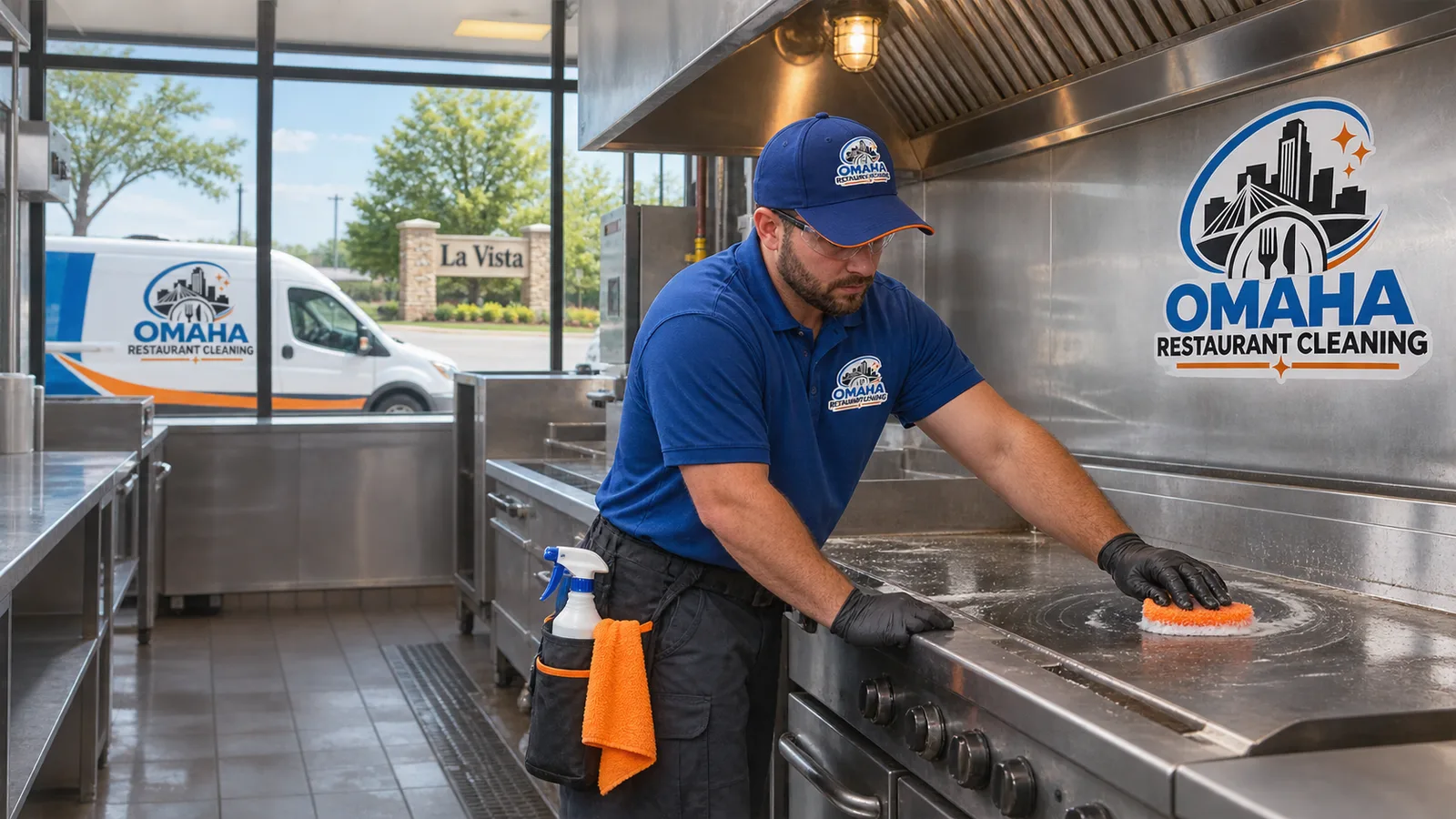
Restaurant Equipment Cleaning La Vista gives food-service operators a practical way to address baked-on grease, spills, crumbs, and residue that routine shift cleaning may not reach. Omaha Restaurant Cleaning develops the scope around your equipment, its condition, and the time available for service. Working from our Omaha base, a professional restaurant company in Omaha, NE coordinates service for La Vista kitchens and documents what is included before cleaning begins.
Commercial kitchens vary widely. A quick-service line may need close attention around fryers, flat tops, and holding equipment, while a full-service restaurant may have ranges, ovens, prep tables, mixers, and refrigeration units in several work zones. We can prioritize selected equipment or plan a broader cleaning of the cooking and prep areas. The goal is a usable scope that fits your kitchen rather than a generic checklist.
Cleaning can be arranged around operating hours when scheduling allows. Before work starts, the team reviews access, shutdown requirements, sensitive components, and areas that should remain untouched. Equipment must be cool and safely available for cleaning. Gas, electrical, or mechanical disconnection is handled only when properly authorized and within the agreed scope.
What Restaurant Equipment Cleaning in La Vista Can Cover
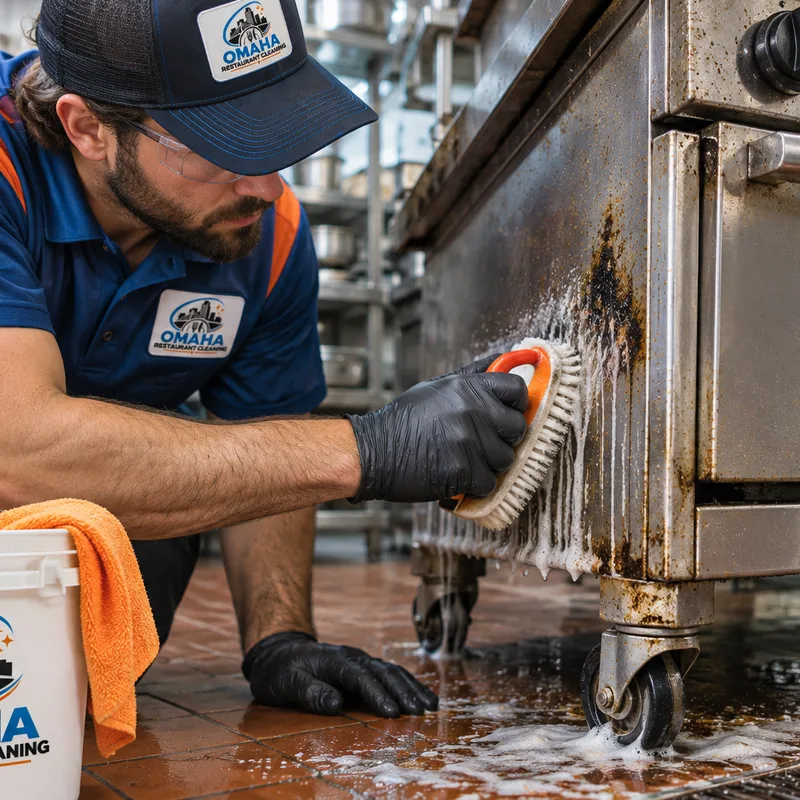
The exact scope depends on the kitchen, but service may include accessible exterior and removable surfaces on ranges, ovens, fryers, griddles, charbroilers, steam tables, prep equipment, shelving, stainless worktables, and refrigeration equipment. Grease and food soil are loosened with methods suited to the surface, then removed without flooding controls, motors, electrical connections, or insulated cavities.
Attention often goes to the places staff cannot fully address during service: equipment sides, legs, casters, splash areas, undersides, control surrounds, seams, and the accessible floor or wall area exposed when movable units are repositioned. Removable racks, trays, guards, and drip components can be included when they are safe to remove and reinstall. Stainless steel is cleaned with the grain to limit visible scratching.
Equipment cleaning does not replace repair, pest treatment, grease-duct cleaning, or code-required maintenance. Exhaust hoods, filters, fans, and ductwork should be identified separately because they involve different access, containment, and fire-safety considerations. The written scope distinguishes included equipment surfaces from excluded internal mechanical parts.
Common Equipment and Work Areas
Cooking Line Equipment
Accessible surfaces on ranges, griddles, charbroilers, ovens, fryers, and warming equipment can be degreased after the units are shut down and fully cooled.
Prep and Holding Equipment
Prep tables, mixer exteriors, slicer components approved for cleaning, steam tables, shelving, and mobile carts can be addressed according to manufacturer care requirements.
Refrigeration Exteriors
Door faces, handles, gaskets, tops, sides, and accessible areas around reach-ins or prep coolers can be cleaned. Motors, coils, refrigerant systems, and electrical repairs require qualified service.
Behind and Beneath Units
When equipment is designed to move and can be repositioned safely, accumulated grease, food debris, and residue on exposed surfaces can be removed.
Stainless Steel Surfaces
Worktables, backsplashes, equipment faces, and shelves receive surface-appropriate cleaning that accounts for grain direction, finish, and soil level.
Focused Deep-Clean Projects
Operators can prioritize a problem line, selected appliances, or equipment affected by a spill, maintenance project, operational change, or upcoming inspection.
How the Equipment Cleaning Process Works
-
Step 1 of 5
Review the Kitchen and Equipment List
We identify the units to be cleaned, their locations, soil conditions, access limits, operating schedule, and any manufacturer instructions available to the operator.
-
Step 2 of 5
Define Safety and Shutdown Needs
The plan states which equipment must be cool, empty, powered down, locked out, or moved by authorized personnel. Food, utensils, smallwares, and exposed ingredients are removed or protected before cleaning.
-
Step 3 of 5
Protect Adjacent Areas
Controls, outlets, motors, open food-contact items, and nearby surfaces are protected as needed. Cleaning chemistry and dwell time are selected for the soil and compatible surface.
-
Step 4 of 5
Degrease and Detail
Technicians work through accessible faces, sides, seams, supports, removable parts, and surrounding areas in the agreed sequence. Food-contact surfaces receive an appropriate rinse after cleaning.
-
Step 5 of 5
Inspect and Return the Area
The completed scope is checked for remaining residue, removable components are returned to their proper positions, and any damage or maintenance concern noticed during cleaning is reported to the operator.
Restaurant Cleaning That Respects Food-Safety Boundaries
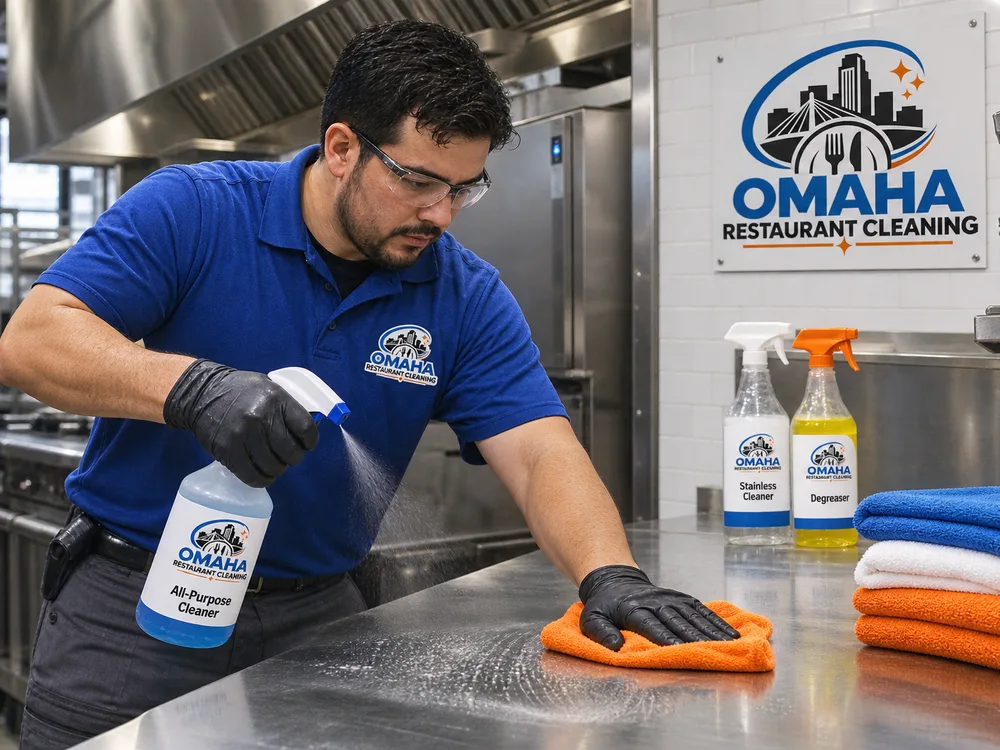
Cleaning removes grease and food soil. Sanitizing is a separate step performed on a cleaned surface with an approved product at the required concentration and contact time. If food-contact surfaces are included, the scope should state whether cleaning, rinsing, and sanitizing are part of the work and who is responsible for each step. Product labels and equipment manufacturer instructions control how chemicals are used.
Restaurant Cleaning La Vista also requires careful separation of dirty and clean tasks. Used towels, loosened debris, and greasy removable parts should not cross into ready-to-eat prep areas. Chemical containers must remain labeled, and products should never be mixed. Bleach and ammonia products, for example, can release dangerous gas when combined.
La Vista restaurants operate under Nebraska food-safety requirements and local inspection authority. A professional cleaning can support an operator's sanitation program, but it does not guarantee an inspection result. Managers remain responsible for daily cleaning schedules, employee practices, equipment condition, pest prevention, and correcting cited issues.
Local Scheduling for La Vista Food-Service Operations
La Vista's location along the Interstate 80 and Giles Road corridors gives restaurants access to customers moving through the southwest Omaha metro, but operating patterns differ by property. A freestanding restaurant may offer easier equipment access than a tenant space with shared loading areas or restricted after-hours entry. Those details affect arrival timing, waste handling, equipment movement, and the amount of setup required.
Winter conditions in eastern Nebraska can also affect loading access and drying. Wet footwear, snow, and deicing residue must be kept out of cleaned work zones, while exterior doors cannot remain open longer than necessary during cold weather. The service plan should account for secure entry, available floor drains or approved wastewater handling, ventilation, and the time surfaces need before kitchen staff return.
Recurring cleaning is useful when the same high-soil equipment needs attention on a set schedule. One-time projects make sense before reopening, after approved maintenance work, when management changes, or when accumulated residue calls for a reset. The right interval depends on menu, cooking volume, grease production, equipment placement, and the kitchen's daily cleaning routine.
How Much Does Restaurant Equipment Cleaning Cost in La Vista?
Restaurant equipment cleaning in La Vista typically ranges from a few hundred dollars for selected units to $1,500 or more for a heavily soiled cooking line or broad kitchen scope. These are general estimates, not fixed local rates. Price changes with equipment count, grease buildup, removable parts, access behind units, required containment, after-hours scheduling, and whether food-contact sanitizing is included. Large appliances that need authorized movement or shutdown can add labor. The exact cost is confirmed after the equipment list, condition, access, and requested scope are reviewed.
Questions About Restaurant Equipment Cleaning La Vista
Can equipment cleaning be scheduled after the restaurant closes?
Yes, after-hours cleaning may be arranged when crew availability, property access, and the size of the scope allow it. The kitchen must provide enough time for equipment to cool, cleaning to be completed, surfaces to dry, and authorized staff to restart or inspect units before the next shift.
Do we need to shut down and empty the equipment first?
Equipment generally needs to be empty, cool, and safely shut down before detailed cleaning begins. Restaurant staff should remove food, utensils, pans, and personal items, while qualified personnel handle any gas, electrical, or mechanical isolation required by the equipment or facility policy.
Will cleaning include behind fryers, ranges, and refrigerators?
Accessible areas behind and beneath equipment can be included when the units are designed to move and can be repositioned without damaging utilities, floors, or connections. Heavy, fixed, hard-piped, or unsafe equipment may require an authorized technician or facility representative before access is possible.
Does the service include sanitizing food-contact surfaces?
Sanitizing can be included when it is written into the scope and the surface is suitable for the selected product. Cleaning must occur first, and the sanitizer must be used at its labeled concentration and contact time. The proposal should identify who handles final sanitizing and pre-opening checks.
How long does commercial kitchen equipment cleaning take?
A focused group of accessible units may take several hours, while a full cooking line or heavily soiled kitchen may require a longer service window. Timing depends on cooling, disassembly, grease buildup, equipment movement, rinsing needs, and drying time, so the schedule is set after the scope is reviewed.
Can you guarantee that our restaurant will pass an inspection?
No cleaning company can guarantee an inspection result because inspectors evaluate much more than equipment cleanliness. Nebraska food establishments are also responsible for food temperatures, employee practices, storage, pest control, plumbing, equipment repair, and ongoing sanitation. Detailed cleaning can address the agreed soil and residue within its scope.
How often should La Vista restaurant equipment receive deep cleaning?
The interval should be based on cooking volume, menu, grease output, equipment design, and the effectiveness of daily cleaning. Fryers and charbroilers may create soil faster than low-grease prep equipment. A manager can use visual checks, manufacturer instructions, maintenance findings, and inspection feedback to set a practical schedule.
LET’S TALK
Plan a Cleaner Omaha Restaurant
Tell us about your restaurant, priority areas, and preferred service window so we can discuss a practical cleaning scope.
REQUEST A QUOTE
Tell Us About Your Restaurant Cleaning Needs
After you submit the form, our team will review the details and contact you to discuss the property, timing, and next steps.