Restaurant Kitchen Deep Cleaning in Papillion
Remove stubborn grease, food residue, and soil from hard-to-reach kitchen surfaces with a detailed cleaning plan built around your equipment, floors, and operating schedule.
Detailed Cleaning for Hard-Working Commercial Kitchens
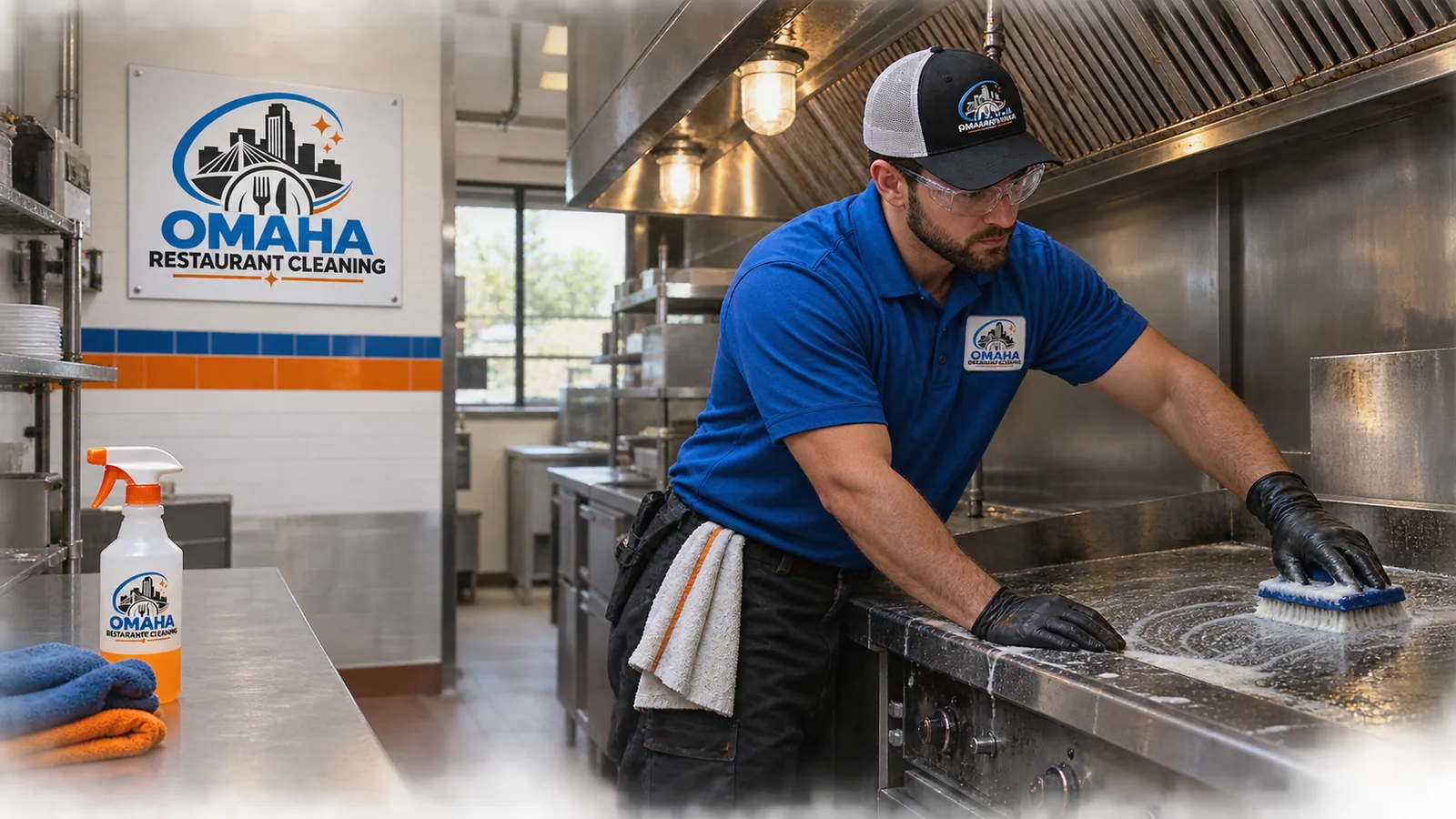
Restaurant Kitchen Deep Cleaning Papillion service addresses the grease and residue that routine closing work cannot fully remove. Cooking vapors settle on equipment sides, walls, shelving, pipes, and other surfaces outside the daily cleaning route. Soil also collects under movable appliances, around floor edges, and at transitions where equipment meets walls or counters.
Omaha Restaurant Cleaning develops the scope around the kitchen rather than applying a generic checklist. Our team at a restaurant company Omaha homeowners rely on brings the same practical attention to preparation, surface compatibility, and orderly work when serving commercial kitchens in nearby Papillion. Before cleaning starts, we identify the equipment and surfaces included, discuss access, and determine when the work can occur with the least disruption to food preparation.
Deep cleaning supports a restaurant's sanitation program, but it does not replace employee cleaning duties, pest management, equipment maintenance, or required inspections. Its purpose is to remove established buildup from agreed surfaces so managers and staff can maintain the kitchen more effectively afterward.
What Restaurant Kitchen Deep Cleaning Papillion Can Cover
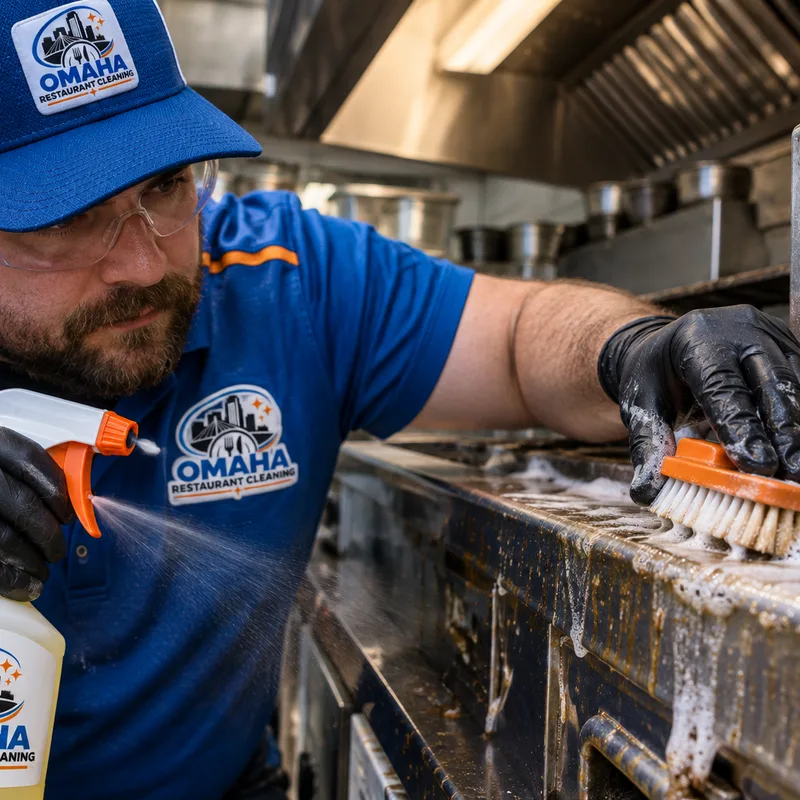
A complete scope may include degreasing equipment exteriors, stainless steel work surfaces, wall panels, shelving, prep-area fixtures, exposed pipes, kick plates, and accessible areas behind or beneath movable equipment. Detail work can also address corners, casters, legs, floor edges, and splash zones where residue tends to collect.
Cleaning methods depend on the surface and soil. Degreasers need suitable dwell time to break down fats before agitation and removal. Stainless steel requires non-damaging tools and a controlled approach that follows the grain where practical. Painted surfaces, plastics, seals, control panels, and electrical components require different products and moisture limits. Heavy deposits may need repeated applications rather than overly aggressive scraping.
The written scope should state whether equipment will be moved, who disconnects utilities, and which components remain excluded. Gas, electrical, refrigeration, and fire-suppression components should be handled only within safe access limits. Exhaust-hood and duct cleaning may require a separate specialist and should not be assumed to be part of general kitchen deep cleaning.
Areas That Need More Than a Closing Wipe-Down
Cooking-Line Surfaces
Grease can spread beyond the visible face of fryers, ranges, grills, and ovens. Cleaning may include accessible sides, fronts, legs, casters, backsplashes, and the floor perimeter around the line.
Prep and Storage Areas
Shelves, worktables, sink exteriors, wall panels, and accessible fixtures can hold film, crumbs, and residue. Products and tools are selected for each surface rather than used indiscriminately.
Edges and Equipment Gaps
Narrow gaps, wall junctions, toe kicks, and areas beneath movable equipment often escape routine cleaning. Access and safe movement are confirmed before these spaces are included.
Doors and Touchpoints
Door faces, handles, push plates, switches, and equipment controls accumulate frequent contact soil. Cleaning around electrical controls requires limited moisture and careful application.
Floor Perimeters
Grease and debris collect along walls, beneath equipment edges, and around fixed legs. Detail cleaning loosens this buildup before the floor is rinsed or recovered with controlled moisture.
Back-of-House Support Spaces
When included in the scope, dish areas, dry-storage floors, service corridors, and waste-route surfaces can be scheduled without turning the job into an undefined whole-building cleaning.
Restaurant Floor Cleaning in Papillion
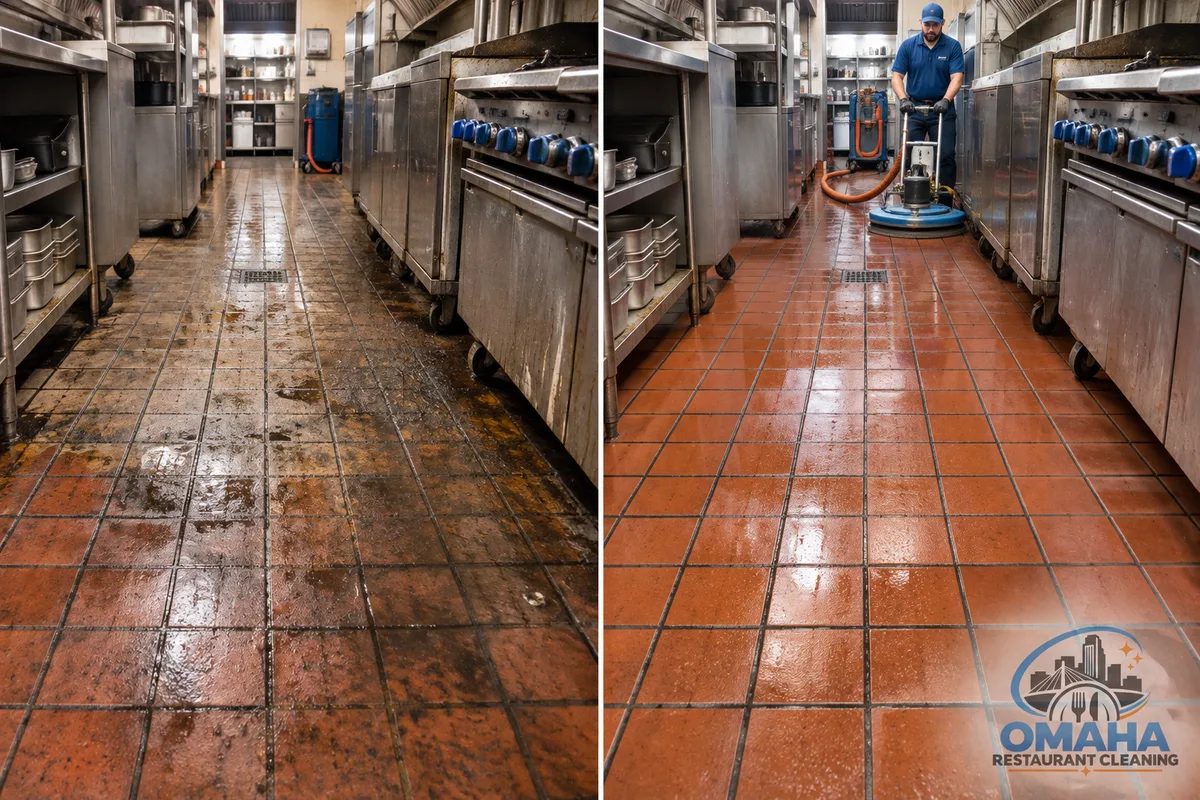
Restaurant Floor Cleaning Papillion work should account for grease load, grout condition, drainage, slip risk, and the flooring material. Quarry tile and ceramic tile often need alkaline degreasing, agitation, and thorough recovery. Grout lines may hold darker soil and require focused brushing. Resilient flooring and sealed surfaces can have different chemical and abrasion limits.
The process begins with dry soil and loose debris removal. Cleaning solution is then applied at the correct dilution and allowed to dwell without drying on the surface. Agitation breaks the bond between the floor and greasy residue. The slurry must be recovered rather than spread into adjacent areas. A clean-water rinse may follow, and the floor needs time to dry before normal traffic resumes.
Floor drains deserve close attention, but drain cleaning and plumbing repair are separate tasks. Wastewater also has to be managed responsibly. Grease, solids, and chemical solution should not be pushed outdoors or into a storm drain. The crew should agree on an acceptable interior disposal point before work begins.
How the Deep-Cleaning Process Works
-
Step 1 of 6
Walk Through the Kitchen
We review the cooking line, prep areas, floors, access constraints, and visible buildup. The walkthrough identifies delicate surfaces, fixed equipment, utility connections, and spaces that require special handling.
-
Step 2 of 6
Set the Scope and Schedule
The cleaning plan lists included surfaces, exclusions, preparation duties, equipment-movement limits, and the expected work window. Overnight or closed-day scheduling may be considered when availability and drying time allow.
-
Step 3 of 6
Prepare and Protect
Food, utensils, small appliances, and exposed ingredients must be removed or secured. Appropriate nearby surfaces are protected, products are labeled for their intended use, and wet-floor controls are placed as needed.
-
Step 4 of 6
Degrease and Detail
The crew applies compatible cleaning agents, allows adequate dwell time, agitates deposits, and removes loosened soil. Detailed work proceeds through the agreed zones so omitted areas can be identified before cleanup.
-
Step 5 of 6
Clean Floors and Recover Residue
Loose debris is removed before the floor is treated. Greasy solution and suspended soil are recovered, floor edges receive detail work, and approved areas are rinsed according to the material and site conditions.
-
Step 6 of 6
Review the Completed Scope
A final walkthrough compares the work with the agreed list. Managers can note access limitations, maintenance concerns, or areas that may benefit from a recurring cleaning interval.
Planning Around Papillion Restaurant Operations
Papillion restaurants may need deep cleaning scheduled after closing, before a planned closure, or during a low-activity window. The right timing depends on the amount of buildup, equipment access, ventilation, noise limits, and how long floors and surfaces need to dry. Nebraska winters add another practical issue: tracked moisture, grit, and deicing residue can reach back-of-house floors through receiving and employee entrances. Dry soil removal before wet cleaning prevents that grit from being spread through greasy areas.
Preparation affects both time and results. Kitchen staff should remove food, cookware, paper goods, and portable items from included zones. Equipment should be cool enough to clean safely. If heavy appliances must move, access to gas, water, or electrical connections needs to be settled before the crew arrives. Cleaning personnel should not disconnect equipment or disturb suppression-system components unless that work is specifically authorized and performed by a qualified party.
Restaurants near Papillion's commercial corridors can have different operating windows than kitchens serving events or evening-heavy dining. Scheduling should follow the actual production cycle, not a fixed assumption. Omaha Restaurant Cleaning is based at 2215 Leavenworth St, Suite 4 in Omaha and coordinates Papillion work with a defined arrival window and written scope.
What to Confirm Before Approving a Cleaning Scope
Included Surfaces
Ask for a specific list covering equipment exteriors, walls, shelves, prep fixtures, floors, edges, and support spaces. A clear list prevents different expectations on the service date.
Equipment Access
Confirm which units can move, who is responsible for disconnection, and whether safe clearance exists. Fixed appliances may limit access to rear and underside surfaces.
Chemical Compatibility
The cleaner should account for stainless steel, aluminum, painted finishes, plastics, rubber seals, tile, grout, and resilient flooring. One product is rarely appropriate for every kitchen surface.
Drying and Reopening
Ask when cleaned areas can return to normal use. Floor material, ventilation, humidity, rinse volume, and the size of the work zone all affect drying time.
Questions About Papillion Restaurant Kitchen Cleaning
How much does restaurant kitchen deep cleaning cost in Papillion?
Pricing depends on kitchen size, grease level, equipment density, access, floor condition, and the surfaces included. A lightly soiled prep kitchen requires less labor than a busy cooking line with established deposits beneath and beside equipment. After-hours scheduling, heavy detail work, and difficult equipment movement may also affect the quote. A walkthrough is the best way to establish a written price for a Papillion kitchen.
How long does a restaurant kitchen deep cleaning take?
A defined work area may take several hours, while a large kitchen or heavy buildup can require a longer shift or staged visits. The timeline depends on dwell time, agitation, equipment access, floor recovery, and drying. Papillion operators should also allow time before production resumes so cleaned floors and food-contact areas can be inspected and prepared for use.
Can cleaning be scheduled after the restaurant closes?
After-hours scheduling may be available when the scope, building access, noise, ventilation, and reopening time permit it. The crew needs enough time to complete detail work and allow floors to dry. Keys, alarm procedures, manager contacts, and access to approved water and wastewater points should be arranged before an overnight visit.
Does the service include moving fryers, ranges, and refrigerators?
Equipment movement is included only when it is specified and the unit can be moved safely without unauthorized utility disconnection. Gas lines, electrical connections, water lines, refrigeration components, and fire-suppression equipment can restrict access. During the walkthrough, each appliance should be classified as movable, fixed, or accessible only around its perimeter.
How often should a Papillion restaurant schedule deep cleaning?
The interval should follow the restaurant's cooking volume, menu, equipment layout, visible buildup, and success of daily cleaning. Frying and high-grease cooking may create faster accumulation than light preparation. A useful schedule can be set after the first cleaning by noting which walls, equipment gaps, grout lines, and floor edges collect residue first.
Is restaurant floor cleaning included with kitchen deep cleaning?
Floor cleaning can be included when it appears in the written scope. The plan should identify the floor material, square footage, grout or edge work, drainage constraints, and wastewater recovery method. Restaurant Floor Cleaning Papillion service may be priced differently when it covers dining rooms, entry areas, or support corridors beyond the kitchen.
Will deep cleaning remove every stain and discoloration?
Deep cleaning removes soil and buildup, but it cannot guarantee removal of permanent staining, corrosion, damaged grout, worn coatings, or discoloration beneath a failed finish. A test area can help distinguish removable residue from material damage. The walkthrough should document damaged or deteriorated surfaces before cleaning begins.
What should restaurant staff do before the crew arrives?
Staff should remove or secure food, utensils, small equipment, paper goods, and personal items from included areas. Cooking equipment should be shut down and cool, and the manager should identify surfaces that cannot get wet. For Papillion jobs scheduled after closing, access instructions and the next production start time should be confirmed in advance.
LET’S TALK
Plan a Cleaner Omaha Restaurant
Tell us about your restaurant, priority areas, and preferred service window so we can discuss a practical cleaning scope.
REQUEST A QUOTE
Tell Us About Your Restaurant Cleaning Needs
After you submit the form, our team will review the details and contact you to discuss the property, timing, and next steps.