Restaurant Cleaning Services
Detailed cleaning for dining rooms, bars, restrooms, floors, kitchens, and hard-to-reach surfaces, scheduled around your operating hours.
A Cleaning Plan Built Around Your Restaurant
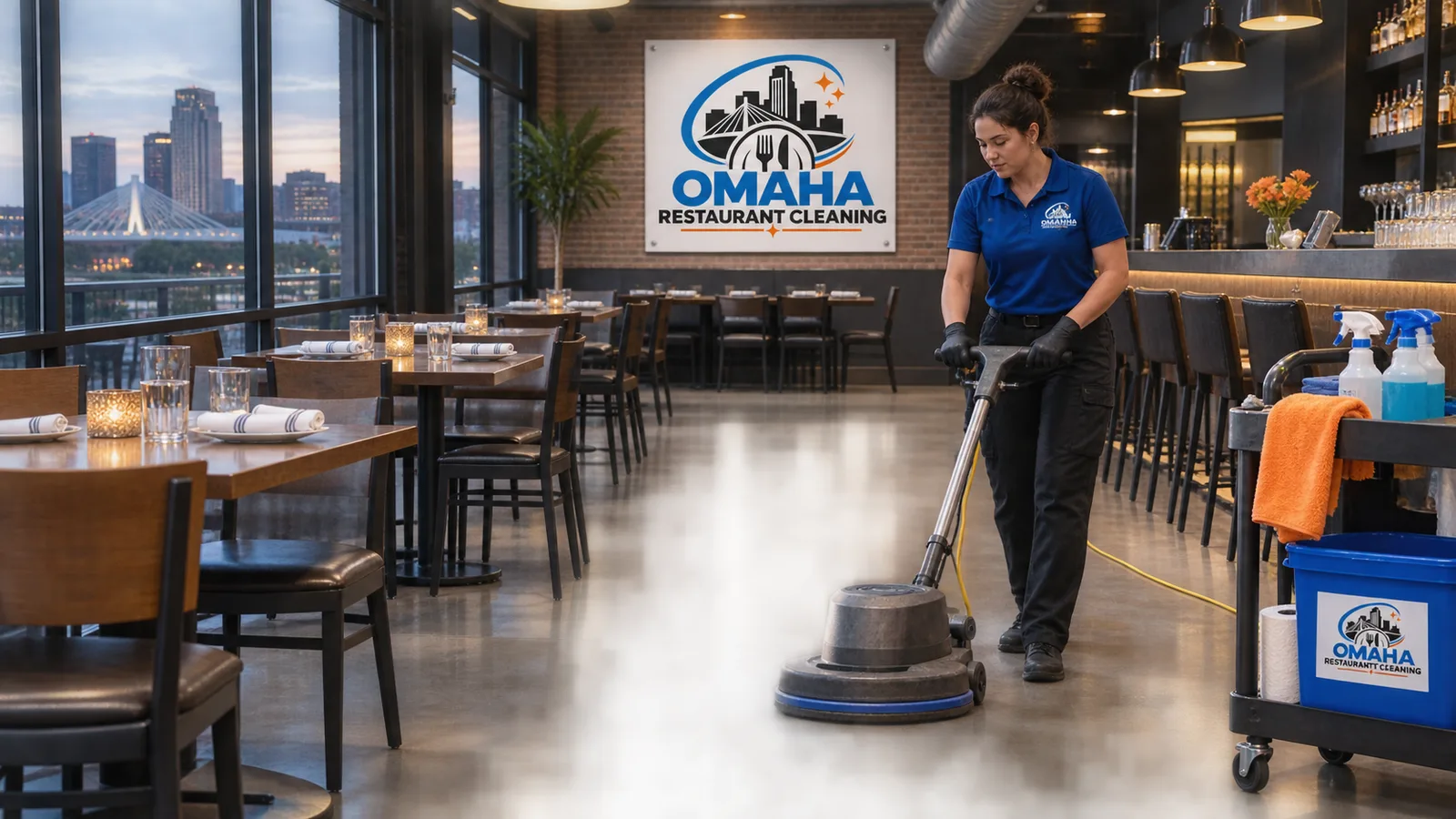
Restaurant Cleaning Services should address the way your space is used, not force every dining operation into the same checklist. A full-service restaurant with upholstered booths needs a different plan than a counter-service concept, neighborhood bar, or private dining venue. Omaha Restaurant Cleaning builds the scope around your floor plan, operating schedule, surface materials, traffic, and division of duties between your staff and the cleaning crew.
Our restaurant specialists serving Omaha handle recurring and detailed work after closing, before opening, or during another agreed service window. The written scope identifies which areas receive attention, how often each task is completed, and which periodic items are rotated into the schedule. This gives managers a practical way to verify the work and reduces confusion about responsibilities.
Local conditions affect the plan. Winter moisture and deicing residue can collect near entrances and damage floor finishes when abrasive grit remains underfoot. Spring pollen and summer dust settle on ledges, vents, decorative fixtures, and exposed overhead surfaces. Restaurants around the Old Market may also deal with heavy pedestrian traffic and older buildings that contain brick, wood, and architectural details requiring careful cleaning. In Aksarben Village, dining spaces often see sharp traffic changes around events and busy evening periods. The right schedule accounts for these conditions instead of waiting for visible buildup.
Complete Restaurant Cleaning Services
Front of House Cleaning
Restaurant front of house cleaning in Omaha can include entry glass, host stands, waiting areas, partitions, doors, reachable fixtures, baseboards, and touchpoints. The goal is a clean arrival area without residue, fingerprints, or dust in the guest's line of sight.
Restaurant Dining Room Cleaning
Dining area cleaning covers tables, chair legs, booth surfaces, ledges, partitions, window sills, baseboards, and the floor beneath movable furniture. Soil is removed from edges and corners rather than pushed toward walls during a quick pass.
Restaurant Bar Cleaning
Bar cleaning addresses stools, foot rails, bar fronts, service counters, shelving exteriors, touchpoints, floors, and accessible surfaces around equipment. Product handling, glassware, and internal equipment tasks can remain with restaurant staff when the scope requires it.
Restaurant Restroom Cleaning
Restaurant restroom cleaning in Omaha includes fixtures, partitions, mirrors, dispensers, doors, touchpoints, floors, and odor-producing soil around edges and bases. Consumable restocking can be included when supplies and responsibilities are agreed in advance.
Restaurant Floor Cleaning
Floor care is matched to the material and soil load. Typical methods include vacuuming, damp mopping, machine scrubbing, spot treatment, and periodic finish care for compatible resilient floors. Entry lanes, chair lines, corners, and transitions receive focused attention.
Back of House Cleaning
Restaurant back of house cleaning in Omaha can cover non-food-contact floors, walls, doors, storage-area exteriors, employee spaces, and accessible surfaces around fixed equipment. Food-contact sanitation and specialized exhaust-system work should be assigned explicitly rather than assumed.
High Dusting for Overhead Surfaces
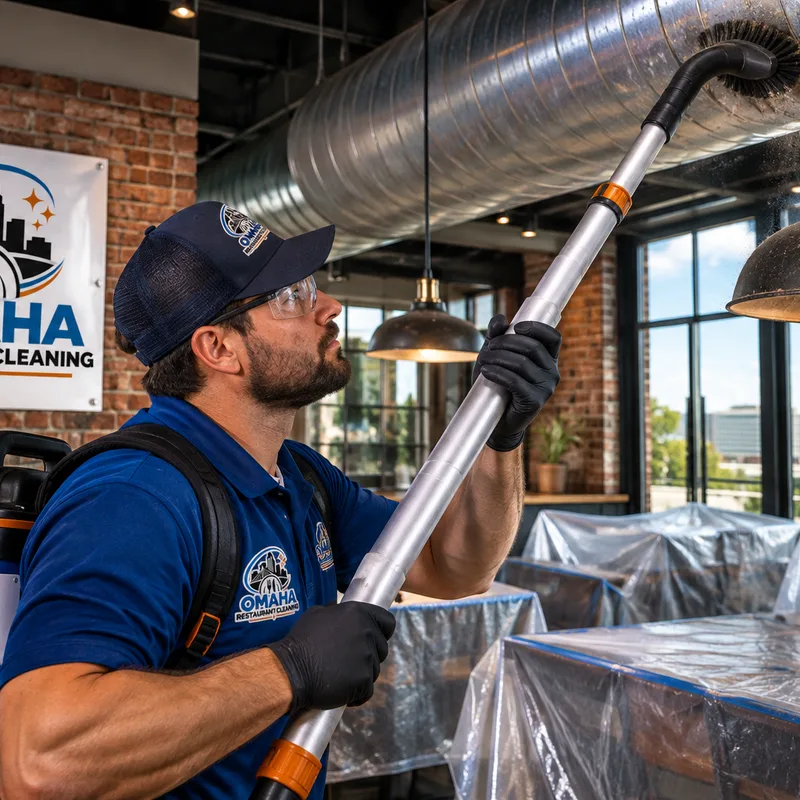
High dusting removes buildup from surfaces that ordinary nightly cleaning cannot reach. Depending on access and the agreed scope, this may include exposed ductwork, pipes, ceiling fans, beams, vents, pendant fixtures, wall tops, signage, decorative ledges, and the upper portions of booths or partitions.
This work requires more than waving a duster overhead. The crew should isolate the area, protect tables and service surfaces, use appropriate extension tools or approved access equipment, and capture loosened dust before completing lower-level cleaning. High work is normally completed first so fallen particles are removed during the remaining service.
The frequency depends on ceiling height, airflow, cooking residue, exposed architecture, and how quickly visible dust develops. Restaurants with open ceilings or decorative installations may need a rotating high-dusting schedule. Older commercial spaces in the Old Market can have exposed brick, beams, pipes, and ledges that create additional dust-catching surfaces. A documented rotation keeps these areas from disappearing from the routine.
Restaurant Floor Cleaning That Matches the Surface
Restaurant floors collect tracked-in grit, beverage residue, food particles, grease, and soil under tables and equipment edges. Using the wrong chemical or too much water can leave a film, create poor traction, or harm the finish. Floor cleaning should start with soil removal, followed by the method and product approved for the material.
Luxury vinyl tile, ceramic tile, sealed concrete, quarry tile, wood, carpet, and resilient flooring have different requirements. Grouted tile often needs edge and grout-line attention. Finished resilient floors may require periodic scrub-and-recoat work, while carpeted dining areas benefit from thorough vacuuming and scheduled extraction based on traffic and spills. Wood and wood-look products require close control of moisture and chemistry.
Omaha winters make entry management especially important. Snowmelt, moisture, grit, and deicing residue can spread beyond the vestibule and create a dull film across traffic lanes. Entry mats should be lifted or moved as appropriate, soil should be removed beneath them, and transitions should be checked before the floor is reopened. Dundee and Benson restaurants often occupy smaller neighborhood storefronts where compact entries can concentrate tracked-in material near guest seating. Downtown venues may experience similar pressure during events and periods of high pedestrian traffic.
How We Set Up Your Cleaning Program
-
Step 1 of 5
Walk Through the Restaurant
We review the dining room, bar, restrooms, entrances, floors, back areas, access points, storage limits, and overhead surfaces. Managers can identify recurring trouble spots and tasks retained by employees.
-
Step 2 of 5
Define the Scope and Frequency
The plan separates nightly or recurring duties from periodic work such as high dusting, machine floor care, detail cleaning behind movable furniture, and carpet extraction. Surface types and approved products are documented.
-
Step 3 of 5
Confirm Access and Service Timing
We agree on arrival windows, alarm or key procedures, occupied-area restrictions, waste handling, supply locations, and who receives service updates. The schedule is built around opening, closing, deliveries, and special events.
-
Step 4 of 5
Clean in a Controlled Order
Crews generally work from high surfaces toward lower surfaces, then complete floors after furniture, fixtures, and touchpoints. Tools and cloths should be separated by task to reduce cross-contamination between restrooms, dining areas, and back areas.
-
Step 5 of 5
Review and Adjust
The scope can be updated when menus, seating layouts, traffic patterns, operating hours, or seasonal conditions change. Clear feedback gives managers a direct way to address a missed detail or add periodic work.
Front and Back of House Need Different Controls
Front of house cleaning is judged closely by guests. Smudged entry glass, dusty ledges, debris under booths, sticky chair backs, and restroom residue can shape a customer's impression before the meal is finished. Crews need enough light and time to inspect edges, furniture bases, corners, and reflective surfaces rather than completing only open floor areas.
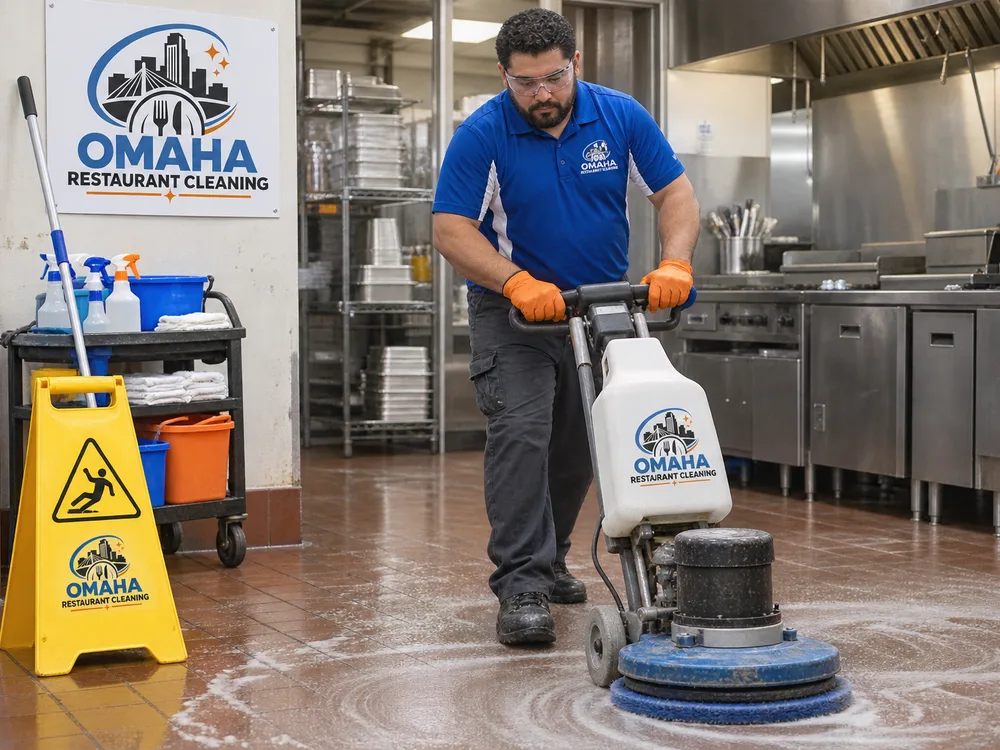
Back of house work involves different soil and safety concerns. Grease can migrate onto floors and lower walls, storage areas can limit access, and equipment may remain hot or in use. The scope should state which equipment may be moved, which surfaces are excluded, and whether restaurant employees must cool down, clear, or disconnect anything before service.
Routine janitorial cleaning is also different from commercial kitchen exhaust cleaning, fire-suppression service, pest control, or repair work. Hood ducts and exhaust systems require specialized procedures and should not be treated as ordinary surface cleaning. Omaha Restaurant Cleaning keeps responsibilities clear so managers know what is included and can coordinate specialized vendors when necessary.
Restaurant Cleaning Questions
How much do restaurant cleaning services cost in Omaha?
Restaurant cleaning is normally priced after a walkthrough because square footage alone does not show the full workload. Cost drivers include service frequency, seating density, number of restrooms, bar areas, floor materials, grease levels, high-dusting access, cleaning window, supply responsibilities, and the condition at startup. A written proposal should separate recurring cleaning from periodic floor care and detail projects so the restaurant can compare the actual scope.
Can cleaning be completed after the restaurant closes?
Yes, restaurant cleaning can usually be scheduled after closing or before opening when access procedures and a realistic service window are established. The plan should address keys or alarms, employee departure, hot equipment, late-running guests, deliveries, and the time when floors must be dry. Event-driven areas such as Downtown Omaha and Aksarben Village may require schedule adjustments on especially busy nights.
How often should restaurant high dusting be scheduled?
High dusting should be scheduled according to visible accumulation, ceiling design, airflow, cooking residue, and guest sightlines rather than a universal interval. Open ceilings, exposed ducts, beams, pendant lights, and decorative ledges often benefit from a rotating plan. High work should occur before lower-surface and floor cleaning, with food and service items protected or removed.
What is included in restaurant front of house cleaning in Omaha?
Front of house cleaning commonly includes entrances, host areas, dining furniture, booths, reachable fixtures, partitions, ledges, glass, touchpoints, baseboards, and floors. Exact duties depend on what employees complete during closing. The walkthrough should also identify movable furniture, fragile decor, upholstered materials, and areas that remain occupied during the service window.
Can you clean restaurant bars and restrooms during the same visit?
Yes, bars and restrooms can be included in the same service when the scope, tools, and cleaning sequence keep those tasks properly separated. Color-coded cloths, dedicated restroom tools, fresh mop solution, and task-specific products help prevent cross-contamination. Bar service should also distinguish general exterior cleaning from food-contact sanitation and internal equipment work.
Does restaurant back of house cleaning include hood and exhaust duct cleaning?
No, ordinary back of house cleaning should not be assumed to include commercial hood and exhaust duct cleaning. A recurring janitorial scope may cover accessible floors, walls, doors, employee areas, and equipment exteriors, but exhaust systems require specialized service. The proposal should list exclusions and state who handles food-contact surfaces, hot equipment, and areas behind fixed machinery.
How quickly can a new restaurant cleaning program begin?
Startup timing depends on walkthrough availability, access arrangements, staffing, required supplies, and whether the restaurant needs an initial deep clean before recurring service. A site with heavy buildup or extensive high dusting may need a separate reset visit. After that work is complete, the recurring crew can follow a defined checklist and periodic rotation.
LET’S TALK
Plan a Cleaner Omaha Restaurant
Tell us about your restaurant, priority areas, and preferred service window so we can discuss a practical cleaning scope.
REQUEST A QUOTE
Tell Us About Your Restaurant Cleaning Needs
After you submit the form, our team will review the details and contact you to discuss the property, timing, and next steps.