Restaurant Cleaning In Council Bluffs
Keep your kitchen, dining room, restrooms, and staff areas ready for every shift with a cleaning plan built around your hours and facility.
Reliable Restaurant Cleaning Council Bluffs Businesses Can Schedule Around Service
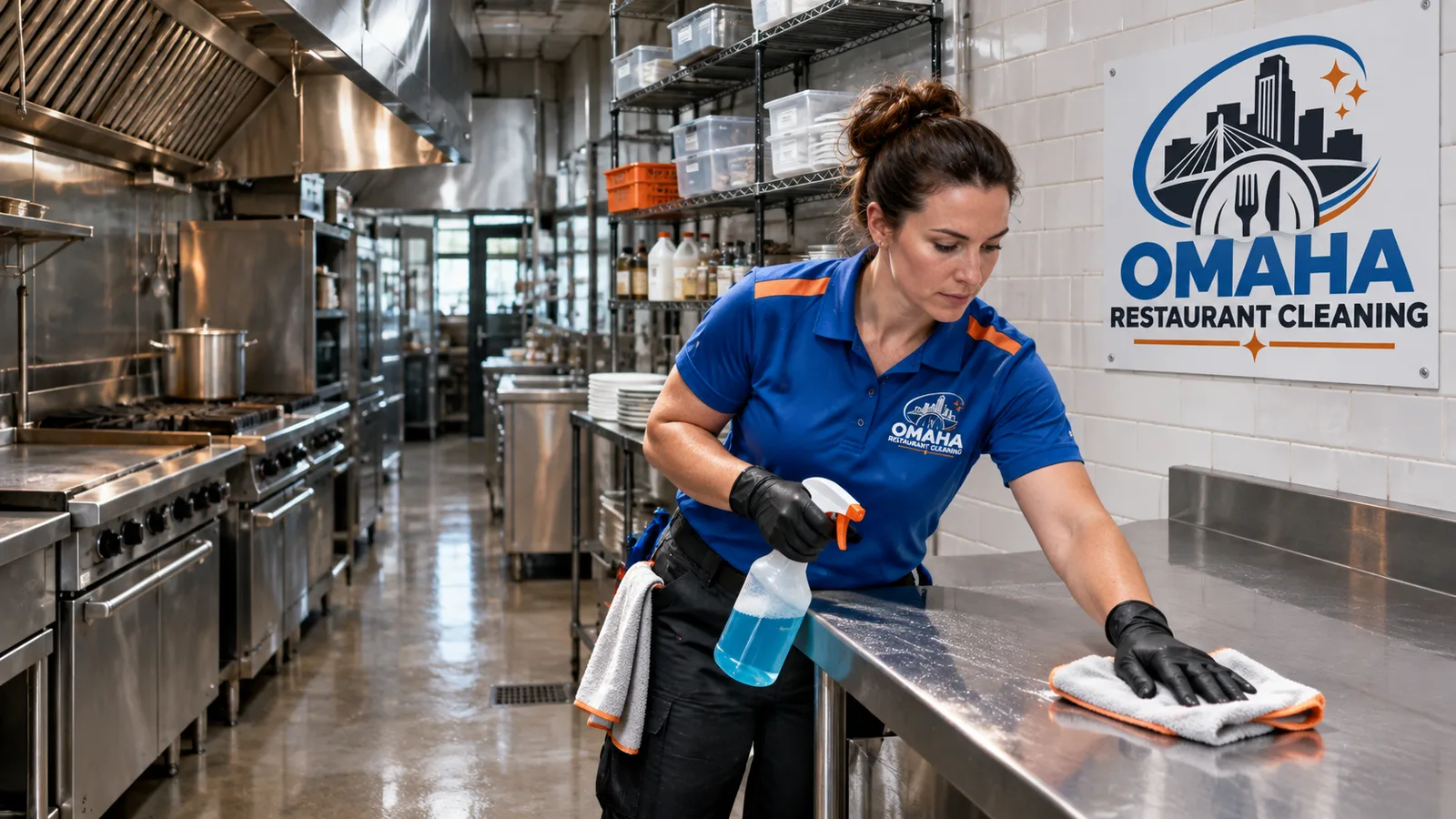
Restaurant Cleaning Council Bluffs should support daily operations without getting in the way of guests, kitchen staff, deliveries, or closing duties. Omaha Restaurant Cleaning builds the scope around your restaurant's layout, hours, traffic, and food preparation areas. The goal is straightforward: repeatable cleaning, clear responsibilities, and dependable attention to the areas that affect guests and employees.
Our team works across the Missouri River from its Omaha base on Leavenworth Street. Our experience as a professional restaurant company in Omaha allows us to coordinate Council Bluffs service for independent restaurants, bars, cafés, quick-service locations, and multi-unit operators. Scheduling may be arranged after closing, before opening, or during another agreed service window.
Council Bluffs restaurants face different operating conditions depending on location. Businesses near West Broadway may contend with steady customer turnover and frequent restroom use. Restaurants around the Mid-America Center can experience changing traffic tied to events. Downtown dining rooms may have older layouts, tight storage areas, or limited room for cleaning equipment. A walkthrough lets us account for those practical details rather than relying on a generic checklist.
A Cleaning Scope Built for the Whole Restaurant
Commercial Kitchen Cleaning
Cleaning may cover floors, walls, washable surfaces, equipment exteriors, prep-area touchpoints, sinks, and accessible spaces beneath or behind movable items. The scope distinguishes routine janitorial work from specialized hood, duct, or internal equipment service.
Dining Room Care
Tables, chairs, booths, partitions, ledges, entrance glass, and hard floors collect fingerprints, crumbs, spills, and tracked-in soil. Service can be timed after the final seating so cleaned areas are ready before the next opening.
Restaurant Bathroom Cleaning
Restrooms require repeatable attention to toilets, urinals, sinks, counters, mirrors, dispensers, partitions, handles, floors, and odor sources. Consumable restocking can be assigned when products are supplied and included in the written scope.
Bar and Service Areas
Bars, beverage stations, server alleys, pickup counters, and host stands have concentrated spills and touchpoints. Cleaning focuses on accessible surfaces without disturbing labeled ingredients, tools, or staff setups.
Staff and Back-of-House Areas
Break areas, offices, corridors, storage-room floors, employee restrooms, and loading-area entrances can be included. These spaces are defined during the walkthrough so responsibility is clear.
Floor Care
The right method depends on the surface. Degreasing and wet mopping suit many kitchen floors, while dining areas may need vacuuming, neutral cleaning, or periodic machine scrubbing based on the flooring material.
Restaurant Bathroom Cleaning Council Bluffs Guests Notice
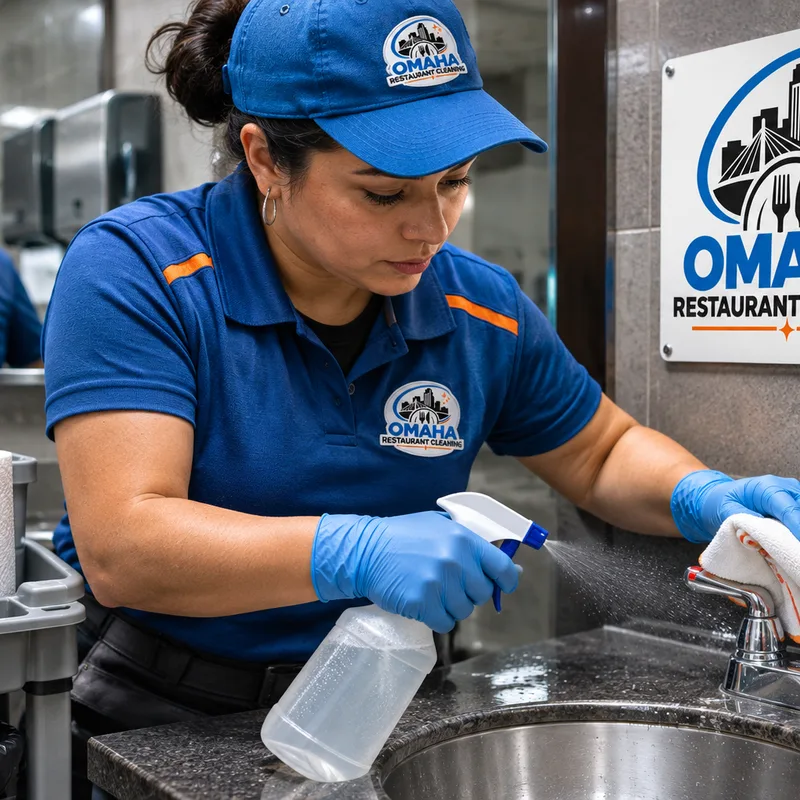
A restaurant restroom can look neglected even when the dining room is well kept. Water spots on fixtures, fingerprints on doors, residue around dispensers, and soil along floor edges are easy to see. Restaurant Bathroom Cleaning Council Bluffs service addresses these details through a repeatable checklist rather than a quick pass with a mop.
The usual sequence starts with removing waste and visible debris. High-touch points such as handles, flush controls, faucets, soap dispensers, and partition latches are cleaned and disinfected with the correct product dwell time. Toilets, urinals, sinks, counters, and mirrors are treated with products suited to each surface. Floors are cleaned last so loosened soil is removed rather than spread back through the room.
Odor control starts with removing the source. That may mean cleaning splash zones, floor edges, the bases of fixtures, waste containers, and accessible drain areas. Fragrance alone does not replace soil removal. Product compatibility also matters because an acidic cleaner, chlorine product, or abrasive tool can damage certain metals, stone, grout, or coated fixtures.
Kitchen Cleaning That Respects Food-Service Operations
Restaurant kitchens require a different approach than offices or retail spaces. Grease films, food debris, moisture, heat, and continuous foot traffic affect how surfaces are cleaned. The work should follow an agreed boundary between the cleaning crew and restaurant staff, particularly around food, utensils, energized equipment, chemicals, and hot surfaces.
Food-contact surfaces require restaurant-approved procedures and products. Cleaning removes soil; sanitizing reduces microorganisms on a cleaned surface; disinfecting is generally used for appropriate non-food-contact surfaces according to the product label. Those terms are not interchangeable. Product concentration, contact time, rinsing requirements, and surface compatibility must follow the manufacturer's label and the restaurant's safety procedures.
Color-coded cloths and tools can reduce cross-contact between restrooms, dining areas, and kitchens. Safety data sheets should be available for workplace chemicals, and products should remain labeled rather than being placed in unidentified containers. Wet-floor controls and careful chemical storage are also part of sound after-hours work.
Routine restaurant cleaning does not automatically include exhaust hood and duct cleaning, pest treatment, mold remediation, hazardous-material handling, or internal cleaning of cooking appliances. If one of those conditions is found, it should be documented and routed to the appropriate specialist rather than quietly added to ordinary janitorial work.
How We Set Up a Council Bluffs Cleaning Plan
-
Step 1 of 5
Walk Through the Restaurant
We review the kitchen, dining room, restrooms, entrances, bar, staff spaces, floors, access points, and closing routine. You can identify priority areas and explain which duties remain with your employees.
-
Step 2 of 5
Define the Scope and Frequency
The written scope assigns tasks by area and frequency. Some duties belong in every visit, while edge work, detailed equipment-exterior cleaning, or machine floor care may be placed on a periodic rotation.
-
Step 3 of 5
Plan Access and Safety
We confirm the service window, entry procedure, alarm instructions, key control, chemical restrictions, waste route, and any surfaces requiring special treatment. This step also establishes how concerns are reported.
-
Step 4 of 5
Begin Scheduled Cleaning
The crew follows the approved task list in an order that limits cross-contact. Restroom tools stay separate from kitchen and dining-room tools, and floors are completed after higher surfaces whenever the work allows.
-
Step 5 of 5
Review and Adjust
Restaurant traffic, menus, staffing, and event schedules can change. The plan can be updated when a recurring issue appears or when a location needs a different frequency for a particular task.
Cleaning for Local Traffic, Weather, and Restaurant Layouts
Council Bluffs weather changes what customers carry through the entrance. Winter moisture, road treatment residue, and grit can build up around vestibules and dining-room paths. Spring rain and summer storms bring mud and moisture. Entry mat care, frequent soil removal, and attention to floor edges help keep that material from spreading toward seating and service areas.
Event-driven traffic near the Mid-America Center may call for service that can adapt around busy nights. West Broadway restaurants may place greater emphasis on entrances, customer restrooms, and high-turnover seating areas. In downtown Council Bluffs, a walkthrough can identify narrow corridors, basement or rear storage access, and other layout constraints that affect equipment choice and cleaning order.
Floor material also changes the method. Quarry tile and textured commercial flooring often hold grease in grout lines and low points. Luxury vinyl, sealed concrete, ceramic tile, carpet, and wood-look surfaces each have different moisture and chemical limits. We identify the surface before selecting a pad, brush, degreaser, or neutral cleaner.
What Determines Your Cleaning Schedule and Price?
Restaurant cleaning is usually quoted after a walkthrough because square footage alone does not show the workload. Pricing depends on the number and size of kitchens, dining rooms, restrooms, bars, and staff areas. Visit frequency, service-window length, floor types, current soil level, equipment that must be worked around, waste handling, access, and requested periodic tasks also affect labor.
A small café with one restroom and light cooking has a different scope than a late-night restaurant with fryers, several dining zones, and two busy restrooms. The initial condition matters as well. A location that needs restorative detail cleaning before recurring service begins will take more time than a maintained facility moving directly into routine visits.
A useful proposal should identify included areas, task frequency, exclusions, access expectations, and who supplies consumables such as liners, soap, towels, or tissue. It should also state whether periodic floor work or detailed cleaning is included in the recurring amount or quoted separately. That written scope gives managers a practical basis for comparing proposals.
Questions About Restaurant Cleaning in Council Bluffs
How often should a Council Bluffs restaurant be professionally cleaned?
The right frequency depends on operating days, customer traffic, cooking volume, restroom use, and what employees clean during each shift. Busy kitchens and guest restrooms may need attention every operating day, while some detailed tasks can follow a weekly or periodic rotation. A walkthrough identifies which duties belong in every visit.
Can cleaning take place after the restaurant closes?
Yes, service can be planned for an agreed period after closing, before opening, or during another low-traffic window. The plan should account for staff departure, locked doors, alarm procedures, hot equipment, deliveries, and any Council Bluffs event schedule that changes closing activity.
What affects the cost of Restaurant Cleaning Council Bluffs service?
The main cost drivers are facility size, cleaning frequency, kitchen soil, restroom count, floor materials, access, and the number of tasks assigned to the crew. Specialized work, restorative first-time cleaning, and periodic machine floor care may be priced separately. The exact cost is confirmed after the restaurant and requested scope have been reviewed.
Do you clean restaurant bathrooms as part of regular service?
Yes, restaurant bathroom cleaning can be included in the recurring scope. Typical tasks cover fixtures, partitions, mirrors, counters, dispensers, high-touch points, waste removal, floors, and odor-source areas. Restocking can also be assigned when the restaurant supplies the consumables.
Are food-contact surfaces cleaned and sanitized?
Food-contact work must follow the restaurant's approved process and the product label, including concentration, contact time, and any required rinse. Cleaning and sanitizing are separate steps. The walkthrough establishes which food-contact surfaces remain the restaurant staff's responsibility and which, if any, are assigned to the cleaning crew.
Can you clean around fryers, grills, and other kitchen equipment?
Accessible floors, walls, and equipment exteriors can be included when the equipment is cool, safe, and ready for cleaning. Internal appliance cleaning, exhaust ducts, and some grease-system work require separate procedures or specialists. Movable-equipment expectations should be settled before service starts.
Can the plan change during busy event periods?
Yes, the schedule or task frequency can be adjusted when business volume changes. Restaurants near the Mid-America Center, for example, may need added attention after event-driven traffic. Advance notice helps align crew timing with the restaurant's closing routine.
LET’S TALK
Plan a Cleaner Omaha Restaurant
Tell us about your restaurant, priority areas, and preferred service window so we can discuss a practical cleaning scope.
REQUEST A QUOTE
Tell Us About Your Restaurant Cleaning Needs
After you submit the form, our team will review the details and contact you to discuss the property, timing, and next steps.