Restaurant Restroom Cleaning in Omaha
Keep guest and employee restrooms fresh, stocked, and ready for every shift with a cleaning schedule built around your operating hours.
Clean Restrooms Protect the Guest Experience
Restaurant Restroom Cleaning addresses the surfaces, fixtures, supplies, odors, and high-touch points that guests notice immediately. Omaha Restaurant Cleaning provides recurring service for dining rooms that need dependable restroom care without disrupting staff or customers.
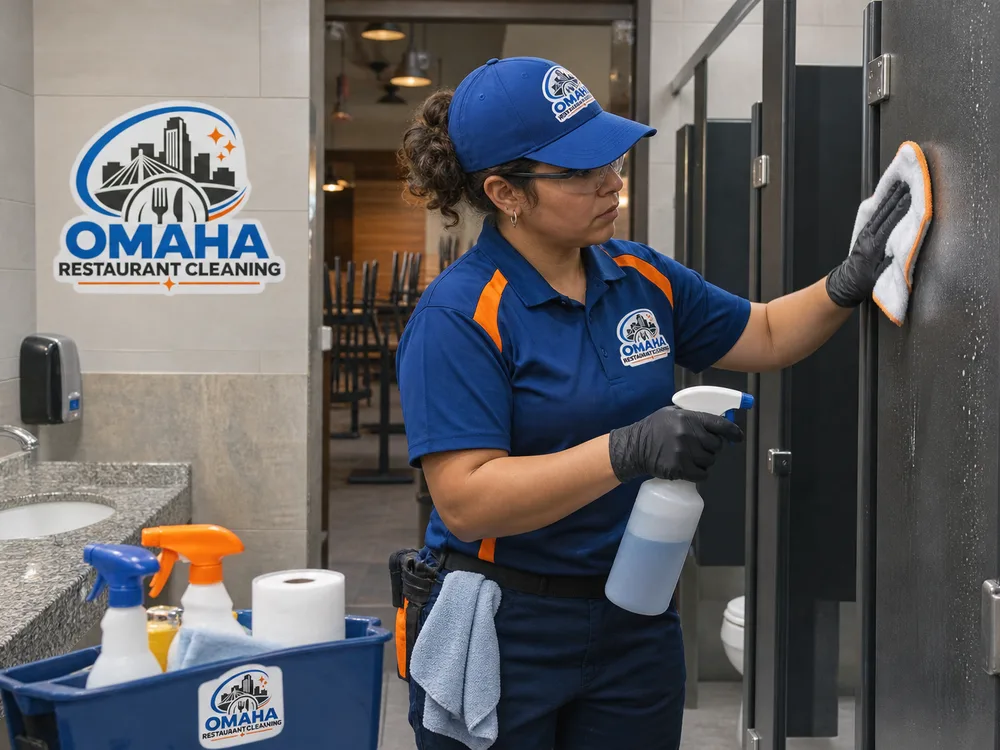
A thorough visit can include toilets, urinals, partitions, sinks, faucets, counters, mirrors, dispensers, doors, handles, floors, baseboards, and waste containers. The work is adjusted to fixture count, traffic, current condition, and the cleaning products appropriate for each surface. To keep the process running smoothly, an experienced restaurant team in Omaha, NE coordinates the work with closing procedures, alarm instructions, access requirements, and the time your facility must be ready for its next shift.
Omaha winters can bring tracked-in moisture, salt, and grit, while wet spring weather increases floor soil near entrances and restroom approaches. A practical scope accounts for those conditions through scheduled floor care, entry checks, and attention to corners where residue collects. The goal is a restroom that looks orderly, smells neutral, and is ready when the doors open.
What Restaurant Janitorial Cleaning Can Include
Fixtures and partitions
Clean and disinfect toilets, urinals, flush handles, partitions, latches, and other frequently touched surfaces. Product dwell time is followed according to the disinfectant label rather than wiping the product away immediately.
Sinks, counters, and mirrors
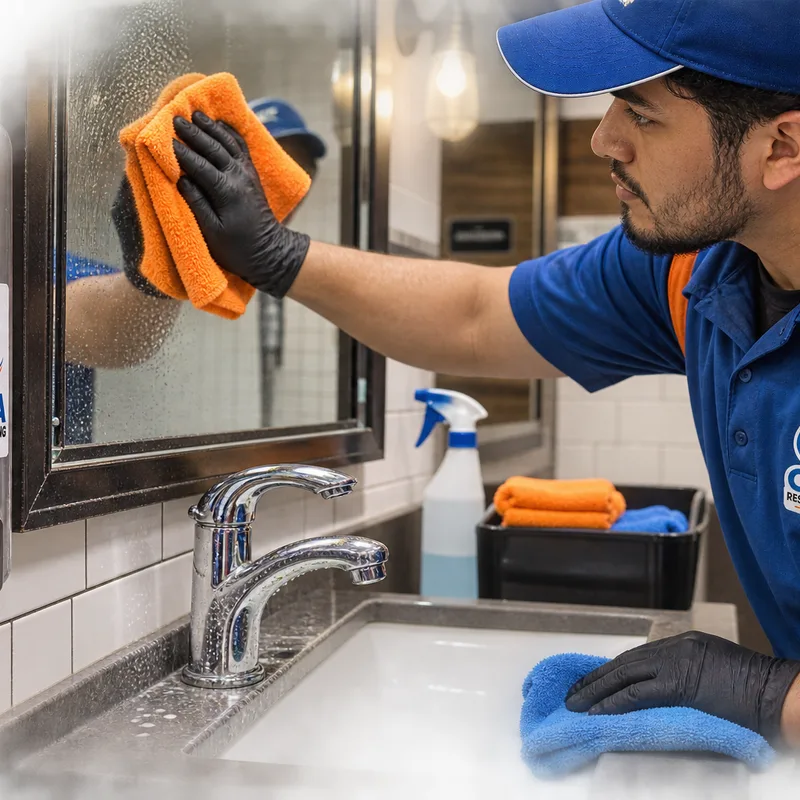
Remove soap film, water spots, fingerprints, and visible soil from basins, faucets, counters, splash areas, mirrors, and dispensers using products suited to the finish.
Floors and edges
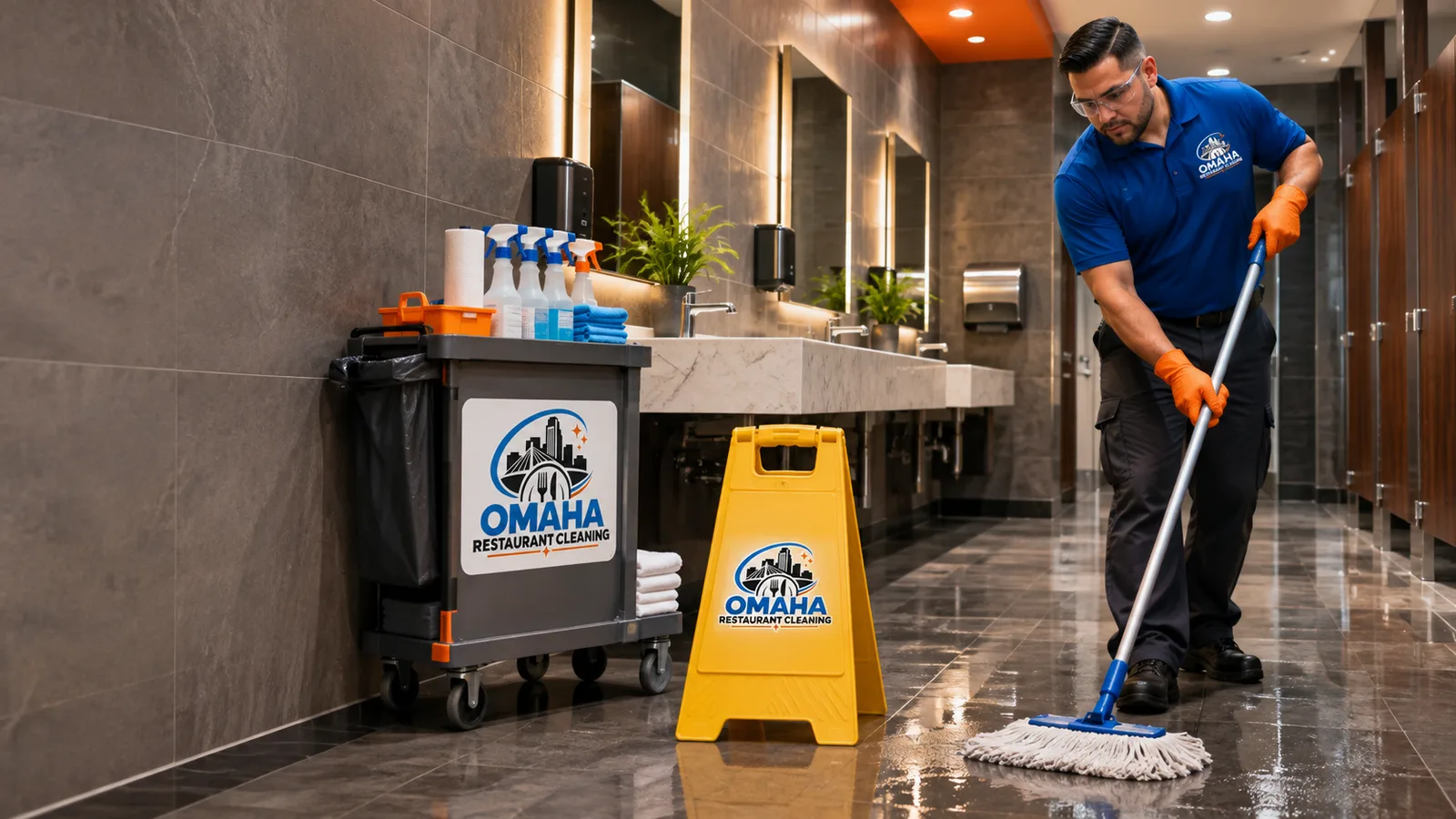
Sweep or vacuum loose debris, then damp mop with attention to corners, grout lines, baseboards, and areas around fixtures. Wet-floor signs remain in place while surfaces dry.
Waste and consumables
Empty waste and sanitary receptacles, replace liners, and replenish agreed supplies such as toilet tissue, hand towels, and soap from the restaurant's on-site stock.
Odor-source removal
Address visible residue around fixtures, drains, waste containers, and hard-to-reach edges. Fragrance alone does not correct an odor caused by accumulated soil.
Service documentation
Record completed tasks and flag leaks, damaged dispensers, recurring clogs, loose fixtures, or low supply inventory for restaurant management.
Daily, Nightly, and Overnight Restaurant Cleaning
The right schedule depends on guest volume, restroom capacity, hours of operation, and how much upkeep employees handle during service. Daily Restaurant Cleaning is often appropriate for high-traffic dining rooms or facilities with long operating hours. Lower-volume locations may use a different recurring frequency, with periodic detail work added as needed.
Nightly Restaurant Cleaning Omaha businesses schedule after the final guests leave gives cleaners room to work without closing stalls or moving around customers. Overnight Restaurant Cleaning can fit late-closing restaurants, provided access, keys, alarm codes, lighting, and lock-up responsibilities are settled before the first visit. Restaurant Night Cleaning should also account for deliveries, closing managers, and morning prep crews so teams do not interfere with one another.
Downtown locations near the Old Market may need scheduling that accounts for evening guest traffic and limited service access. Restaurants in Aksarben Village often balance dining traffic with nearby events, while establishments near CHI Health Center Omaha can experience event-driven surges. These conditions affect timing and workload, so recurring plans should allow management to communicate schedule changes before a busy night.
How Recurring Restaurant Cleaning Starts
-
Step 1 of 5
Walk through the restrooms
We review fixture count, floor type, dispensers, current buildup, access, storage, and the cleaning tasks employees already complete during open hours.
-
Step 2 of 5
Set the written scope
The proposal identifies visit frequency, included tasks, supply responsibilities, detail-cleaning needs, and any areas that require special products or handling.
-
Step 3 of 5
Plan access and timing
Management confirms service windows, entry instructions, alarms, keys, parking or loading access, and the person to contact if the nightly schedule changes.
-
Step 4 of 5
Complete and document service
The crew follows the task list in a consistent order, checks its work, reports maintenance concerns, and secures the restaurant according to the agreed procedure.
-
Step 5 of 5
Adjust as traffic changes
The schedule can be reviewed when patio season, holidays, arena events, staffing changes, or extended hours create a different level of restroom use.
Choosing a Restaurant Janitorial Company
A Restaurant Janitorial Company should provide more than a vague promise to clean the restroom. Ask for a written scope that identifies fixtures, floors, waste handling, consumable restocking, high-touch disinfection, service frequency, and periodic detail work. It should also state who supplies paper products, soap, liners, and specialty chemicals.
Product handling matters. Disinfectants have label directions for dilution, compatible surfaces, contact time, and safe use. Different materials may require different cleaners: an acidic bowl cleaner should not be treated as a general surface product, and abrasive tools can damage polished metal or certain countertop finishes. Color-coded cloths and tools can help reduce cross-use between toilets, sinks, and other areas.
Reliable Restaurant Janitorial Services Omaha managers can evaluate through consistent arrival windows, clear communication, task verification, and prompt reporting. A good inspection looks beyond appearance. It checks corners, the rear and base of fixtures, partition edges, dispensers, floor-wall transitions, and odor sources. The scope should also distinguish janitorial work from plumbing repairs, pest treatment, and hazardous-material cleanup, which may require another qualified provider.
A Scope Built for the Restroom You Operate
No two restaurant restrooms carry the same workload. A small single-restroom dining room may need a compact checklist, while a multi-stall facility needs more time for partitions, urinals, dispensers, waste, and floor edges. Touchless fixtures can reduce contact points but still collect splashes and mineral residue. Textured tile and grout generally require a different method than resilient flooring.
The initial condition also affects the plan. Heavy buildup around fixture bases, darkened grout, adhesive residue, or neglected vents may call for corrective detail cleaning before routine service can maintain the result. Recurring Restaurant Cleaning is most predictable after that baseline has been established.
Restaurants should identify any employee-only restrooms, shared building facilities, locked stalls, or supply rooms during the walkthrough. If restroom cleaning is one part of a broader after-hours scope, tasks and timing should be written clearly so the crew knows which spaces are included and which remain the responsibility of restaurant staff or property management.
How Much Does Restaurant Restroom Cleaning Cost in Omaha?
Recurring restroom cleaning in Omaha typically costs about $40 to $150 per visit for a small to mid-sized restaurant, while larger multi-restroom facilities or detailed after-hours scopes may run $150 to $350 or more per visit. These are general planning ranges, not a quote.
Final pricing depends on fixture and stall count, frequency, soil level, floor material, service window, access, supply restocking, and whether an initial deep cleaning is needed. A walkthrough confirms the exact scope and price before recurring work begins.
Restaurant Restroom Cleaning Questions
Can restroom cleaning be completed after our Omaha restaurant closes?
Yes, nightly or overnight service can be arranged around the restaurant's closing and opening times. The plan should define entry, alarm, lighting, lock-up, and schedule-change procedures, especially for late-closing locations or restaurants affected by events near CHI Health Center Omaha.
How often should a restaurant restroom be professionally cleaned?
The right frequency depends on traffic, fixture count, open hours, and employee upkeep during service. Busy or long-hours restaurants may need daily or nightly cleaning, while another location may use a less frequent recurring plan plus scheduled detail work. A walkthrough provides the best basis for the schedule.
Do cleaners restock toilet paper, towels, and soap?
Restocking can be included when it is listed in the written scope and the agreed supplies are available on the premises. Management should identify approved products, storage locations, minimum inventory expectations, and who orders replacements.
Does restaurant restroom cleaning include drain or plumbing repairs?
Routine cleaning can remove accessible soil around drains and fixtures, but plumbing repairs, sewer backups, and recurring clogs require the appropriate repair provider. The cleaning crew can document leaks, slow drains, loose fixtures, or damaged dispensers so management can arrange service.
Can you handle an initial deep cleaning before recurring service begins?
An initial corrective cleaning can be scoped when buildup is beyond what a routine visit can reasonably address. The walkthrough identifies heavy scale, darkened grout, residue around fixture bases, neglected edges, and other conditions that may require extra labor before maintenance cleaning starts.
What should we ask before hiring a restaurant janitorial company?
Ask for a written task list, service frequency, access plan, product responsibilities, supply-restocking terms, quality checks, and a process for reporting damage or maintenance concerns. Omaha restaurants should also confirm how the company handles weather delays and event-driven changes to evening access.
Can the cleaning schedule change during busy seasons or special events?
Yes, recurring schedules can be reviewed when operating hours or guest volume change. Restaurants near the Old Market, Aksarben Village, or major downtown venues may need added visits or adjusted start times around reservations and events, subject to crew availability and advance notice.
LET’S TALK
Plan a Cleaner Omaha Restaurant
Tell us about your restaurant, priority areas, and preferred service window so we can discuss a practical cleaning scope.
REQUEST A QUOTE
Tell Us About Your Restaurant Cleaning Needs
After you submit the form, our team will review the details and contact you to discuss the property, timing, and next steps.