Restaurant Cleaning Bellevue
Consistent cleaning for commercial kitchens, dining rooms, restrooms, floors, and high-touch areas, scheduled around your operating hours.
Restaurant Cleaning Built Around Your Operation
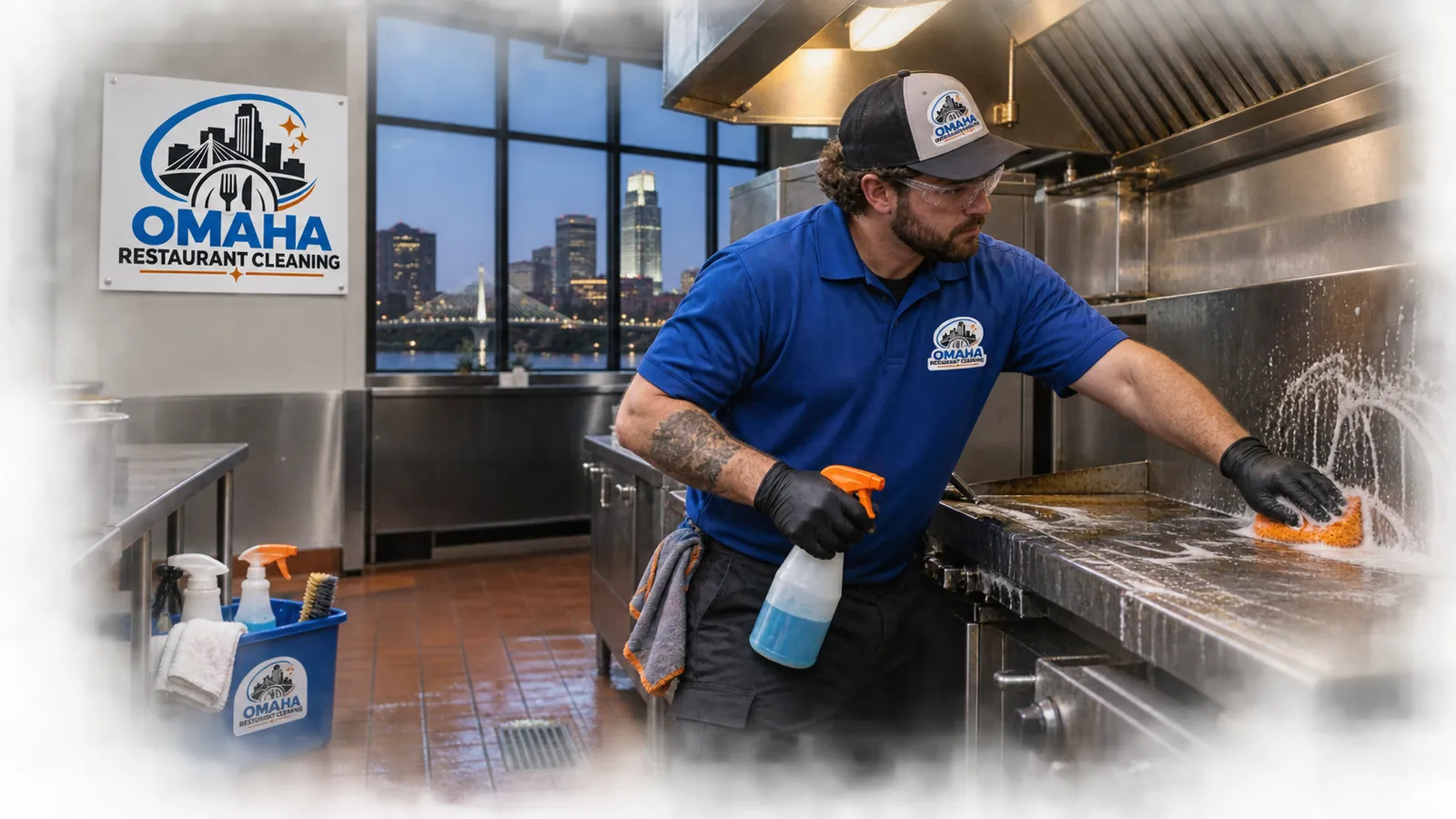
Restaurant Cleaning Bellevue should account for how your establishment actually works. A quick-service kitchen has different grease, traffic, and scheduling demands than a full-service dining room or neighborhood bar. Omaha Restaurant Cleaning develops a written scope around your layout, hours, surfaces, and inspection priorities rather than applying the same checklist to every property.
Working from our Omaha base, Omaha's local restaurant service handles recurring and detailed cleaning for food establishments in Bellevue. That nearby presence supports practical scheduling for businesses along the Omaha and Bellevue corridor. We can arrange work after closing, before opening, or during another agreed low-traffic period so your staff can return to a prepared workspace.
The scope can cover customer-facing rooms and back-of-house areas under one plan. Each task is assigned a frequency, which makes expectations clear and helps prevent periodic work such as baseboard washing or floor-edge detailing from being overlooked.
What Restaurant Cleaning Services in Bellevue Can Cover
Commercial Kitchen Cleaning
Degreasing for equipment exteriors, stainless steel surfaces, backsplashes, prep areas, washable walls, floor edges, and accessible spaces beneath movable equipment. Food-contact surfaces require products and procedures appropriate for those areas.
Dining Rooms and Bars
Cleaning for tables, chairs, booths, bar exteriors, partitions, ledges, glass, and other guest-facing surfaces. The plan can account for fingerprints, crumbs, spills, and buildup in hard-to-reach edges.
Floors and Mat Areas
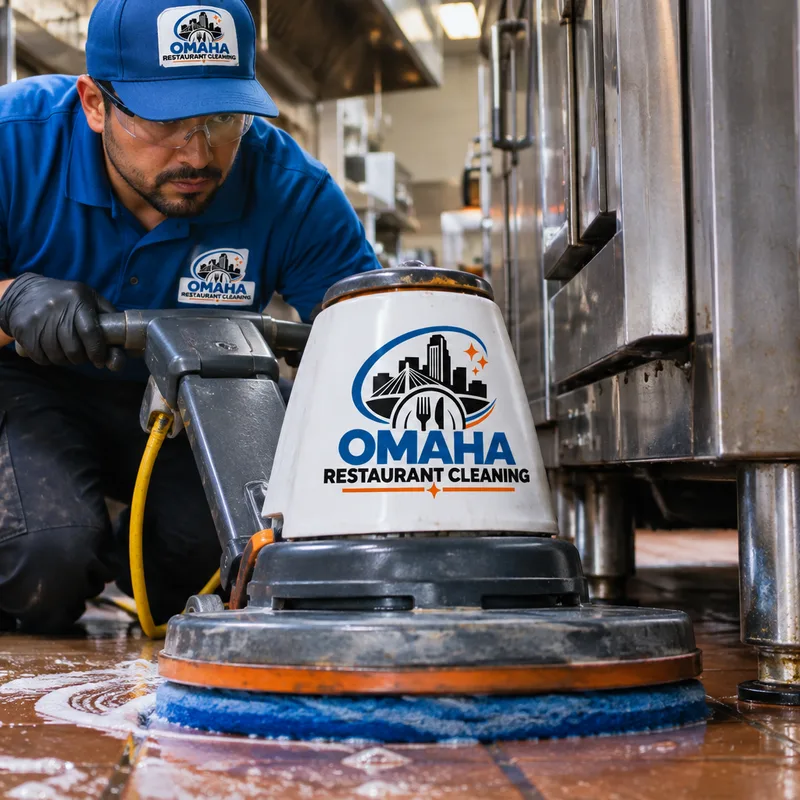
Vacuuming, sweeping, damp mopping, and machine scrubbing can be assigned according to the floor material and soil level. Entry zones and mat areas receive extra attention when rain, snow, or deicing residue is tracked indoors.
Restrooms
Cleaning and disinfection can cover toilets, urinals, sinks, partitions, dispensers, mirrors, floors, and touchpoints. Supply restocking may be added when products and responsibilities are defined in the scope.
High-Touch Surfaces
Door handles, push plates, railings, switches, shared fixtures, and other frequently handled surfaces can be included in each scheduled visit rather than left to occasional deep cleaning.
Detailed Periodic Work
Low-frequency tasks may include baseboards, vents, wall spots, floor edges, furniture legs, and other areas that routine shift cleaning may miss. Their cadence can be listed separately in the service plan.
A Practical Plan for Bellevue Restaurants
Bellevue establishments near Offutt Air Force Base may experience concentrated traffic around shift changes and meal periods, while restaurants near the Highway 370 retail corridor can see steady vehicle-based customer flow. In Olde Towne Bellevue, smaller or older commercial layouts may require more careful equipment access and floor-edge work. These operating differences affect when cleaning can happen and how long a visit takes.
Eastern Nebraska weather also affects the work. Spring rain can bring mud into entryways, and winter snow treatment can leave grit and residue on hard floors. Entry mats, vestibules, grout lines, and floor finish may need adjusted attention during those periods. A useful plan changes with actual soil conditions rather than staying fixed throughout the year.
A walkthrough lets us identify floor materials, cooking residue, storage constraints, secure areas, alarm procedures, and access beneath equipment. We also clarify what your staff handles during the shift and what the cleaning crew handles after service. That division reduces gaps and duplicated work.
How Our Restaurant Cleaning Process Works
-
Step 1 of 5
Walk Through the Establishment
We review the kitchen, dining room, bar, restrooms, entries, storage access, floor types, and any areas that need restricted access. We also discuss operating hours and the best arrival window.
-
Step 2 of 5
Set the Scope and Frequencies
The written plan separates tasks by visit, weekly rotation, or periodic service. It records exclusions and special instructions so both parties understand the work before service starts.
-
Step 3 of 5
Prepare Access and Safety Details
We confirm keys or entry procedures, alarm instructions, equipment restrictions, chemical storage expectations, wet-floor controls, and the designated contact for schedule changes.
-
Step 4 of 5
Complete and Check the Work
The crew follows the assigned checklist and reviews the cleaned areas before leaving. Any access issue or condition outside the normal scope can be documented for follow-up.
-
Step 5 of 5
Adjust as Operations Change
Menus, hours, traffic, and seasons can change soil levels. The plan can be revised when a different task frequency or service window is more practical.
Cleaning Methods Matched to Restaurant Surfaces
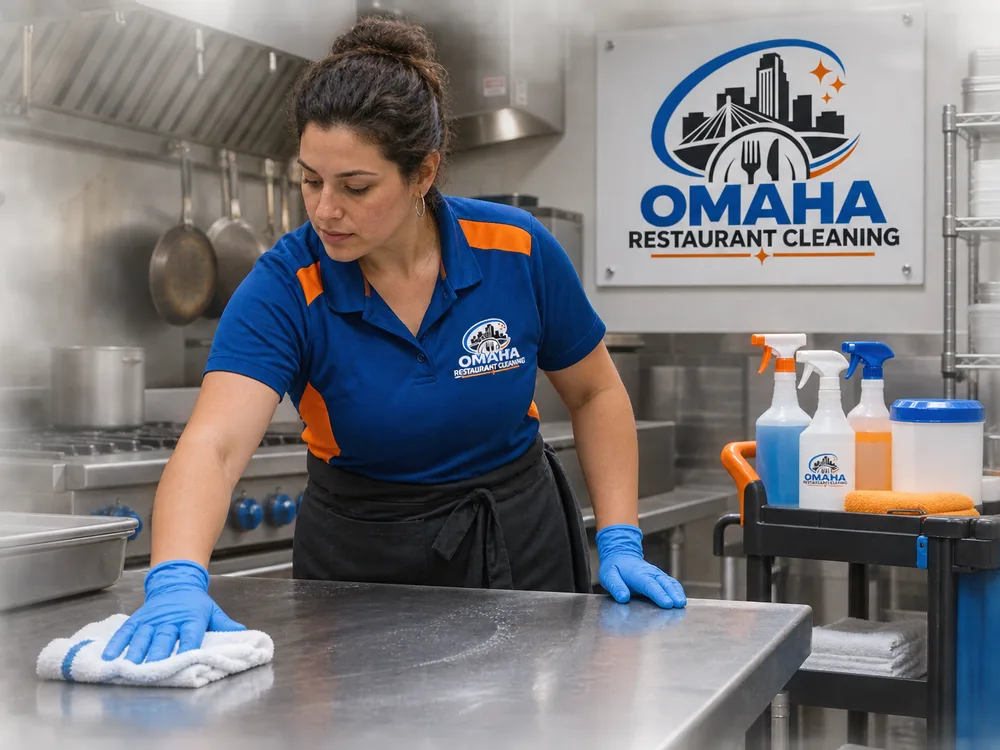
Restaurant cleaning depends on correct product selection, dwell time, agitation, and removal. A degreaser suited to a kitchen floor may be wrong for finished wood or certain natural stone. Stainless steel should be cleaned with the grain where practical, and chemical residue should not be left on food-preparation surfaces.
Cleaning and sanitizing are separate steps. Cleaning removes food soil, grease, and debris. Sanitizing follows on applicable food-contact surfaces with a product used according to its label, including the required concentration and contact time. Disinfectants used on restroom or high-touch surfaces also need their stated dwell time to work as directed. Product labels and safety data sheets guide handling, dilution, and storage.
We also distinguish general kitchen cleaning from specialized exhaust-system work. Hoods, ducts, and rooftop exhaust components require appropriate specialist service and should not be confused with wiping accessible hood exteriors or nearby surfaces. The scope identifies that boundary clearly.
Why Consistency Matters More Than a One-Time Cleanup
A detailed cleanup can correct accumulated soil, but recurring service keeps standards from slipping between major visits. Grease migrates beyond the cooking line, crumbs settle under furniture, and floor edges collect residue even when staff complete daily closing duties. Assigning each area a specific frequency makes the workload manageable.
Restaurant Cleaning Services Bellevue may be scheduled nightly, several times per week, weekly, or as periodic detail work. The right cadence depends on operating days, covers, cooking methods, staffing, floor materials, and the amount of cleaning completed by employees. A bakery with flour dust needs a different plan than a grill-heavy kitchen, even when the rooms are similar in size.
Clear communication is part of dependable service. Schedule changes, locked rooms, unusual spills, maintenance problems, and newly added tasks should be documented instead of left to assumption. That record helps the cleaning plan stay aligned with the establishment as operations change.
Restaurant Cleaning Bellevue FAQs
How much do restaurant cleaning services in Bellevue cost?
Restaurant cleaning is usually priced after a walkthrough because the final rate depends on square footage, visit frequency, kitchen grease levels, floor care, restroom count, equipment access, and the amount of detail work required. A small dining room with light food preparation takes less labor than a high-volume kitchen needing frequent degreasing and machine floor work. The written proposal should identify included tasks, their frequency, and any initial cleanup separately.
Can cleaning be scheduled after our Bellevue restaurant closes?
Yes, service can be planned for after closing, before opening, or another agreed low-traffic period when staffing and access allow. The schedule should account for employee departure, alarm procedures, locked areas, product dwell times, floor drying, and the time your opening crew arrives. Establishments serving late shifts or traffic connected with Offutt Air Force Base may need a different window than breakfast-focused operations.
Do you clean both the kitchen and dining room?
Yes, one scope can include back-of-house and customer-facing areas. Kitchen work may cover accessible equipment exteriors, prep-area surfaces, washable walls, and floors, while dining-room work may include tables, booths, chairs, ledges, glass, and entry areas. Food-contact sanitizing, specialized exhaust cleaning, pest control, and equipment disassembly should be clearly identified as included, excluded, or handled by another qualified provider.
How often should a restaurant be professionally cleaned?
The frequency should match operating volume, cooking methods, employee closing duties, and the condition of each area. High-traffic floors and restrooms may need attention every operating day, while baseboards, vents, walls, and detailed floor edges may follow a weekly or periodic rotation. Bellevue's winter grit and wet spring conditions can also justify more frequent entry and hard-floor care.
Can you provide a one-time deep cleaning before recurring service?
Yes, an initial detail cleaning can establish a workable baseline before recurring visits begin. It may address accumulated grease, neglected edges, walls, baseboards, furniture bases, and accessible areas beneath movable equipment. A walkthrough determines what can be completed safely, whether equipment must be moved by restaurant staff, and which tasks require specialized contractors.
Will restaurant cleaning help us prepare for a health inspection?
Professional cleaning can support day-to-day sanitation and help address cleaning items within the agreed scope, but it cannot guarantee an inspection result. Restaurant operators remain responsible for food handling, temperatures, storage, pest management, equipment condition, employee practices, and compliance with applicable requirements. A useful cleaning checklist identifies who handles each task so responsibilities are not assumed.
What should we prepare before the cleaning crew arrives?
Secure food, remove personal items, complete agreed closing duties, and make designated areas accessible before the crew arrives. Staff should report spills, broken equipment, sharp objects, restricted areas, and any schedule change. Keys, alarm instructions, emergency contacts, and chemical storage locations should be settled during setup rather than improvised during the first visit.
LET’S TALK
Plan a Cleaner Omaha Restaurant
Tell us about your restaurant, priority areas, and preferred service window so we can discuss a practical cleaning scope.
REQUEST A QUOTE
Tell Us About Your Restaurant Cleaning Needs
After you submit the form, our team will review the details and contact you to discuss the property, timing, and next steps.